
How to Choose a Transmission Specialist in Melbourne
A hesitation pulling away from the lights, a shudder during gear changes or a warning message on the dash can quickly turn an ordinary drive into a concern. Knowing how to choose a transmission specialist means looking beyond a workshop’s general service list and finding a team that can accurately assess the system fitted to your vehicle – before recommending the right next step.
Modern automatic, DSG, dual-clutch and S-Tronic transmissions are highly sophisticated. They combine mechanical components, specialised fluids, electronic controls and software, so a fault that feels similar on the road can have very different causes. The right specialist provides clear answers, careful workmanship and practical support for getting your vehicle back to dependable daily use.
Start with experience in your transmission type
Not every automatic transmission works in the same way. A conventional torque-converter automatic, a continuously variable transmission, a dual-clutch transmission (DCT) and a DSG gearbox each have different designs, service requirements and common fault patterns. European vehicles, in particular, may use systems that require specialised diagnostic capability and model-specific repair knowledge.
When speaking with a workshop, ask whether it regularly services and repairs your vehicle’s transmission type. This is especially relevant if you drive a Volkswagen, Audi, Škoda, BMW, Mercedes-Benz or another European vehicle with a DSG, S-Tronic or dual-clutch gearbox. Familiarity with the system helps the technician interpret symptoms properly and determine whether the concern relates to fluid condition, clutch wear, a mechatronic unit, sensors, software or another component.
A specialist should be comfortable explaining this in plain language. You do not need to understand every internal part of a gearbox. You should, however, feel confident that the workshop understands the equipment in your car and the correct process for its care.
Look for diagnosis before major repair recommendations
Transmission symptoms can be frustratingly vague. A rough shift may be linked to the transmission itself, but it can also be affected by engine performance, battery voltage, cooling issues, driveline components or electronic faults elsewhere in the vehicle. Replacing parts before identifying the cause can create unnecessary disruption and fail to solve the underlying problem.
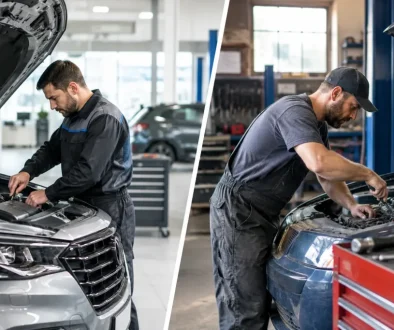
A dependable transmission specialist begins with professional diagnostics. That may involve reviewing fault codes, checking live operating data, assessing fluid condition where appropriate, road testing the vehicle and considering its service history. The aim is to build an accurate picture rather than rely on assumptions.
Ask how the workshop plans to investigate the concern and what information they need from you. Details such as when the issue occurs, whether it happens when cold or warm, any dashboard warnings and recent changes in driving behaviour can all assist the diagnosis. A workshop that listens closely to these details is more likely to provide advice tailored to your vehicle.
Clear explanations are part of good service
Technical expertise matters, but so does communication. You should receive a straightforward explanation of what has been found, what the recommended work is designed to address and what may happen if the issue is left unattended. If further assessment is needed before a final recommendation can be made, a professional workshop should say so clearly.
Transmission work can range from scheduled servicing through to mechatronic repairs, clutch replacement or more extensive restoration. The appropriate solution depends on the vehicle, its condition and the confirmed fault. Be wary of any approach that treats every rough shift as the same problem.
Check that scheduled transmission servicing is taken seriously
Many transmission concerns are easier to manage when servicing is carried out at the right intervals. Depending on the vehicle and gearbox design, this can include changing approved transmission fluid and filters, inspecting for leaks, resetting service adaptations where required and checking for stored faults.
Some drivers assume an automatic transmission does not need attention because it is operating normally. In reality, heat, stop-start traffic, hills, towing and regular commuting can all place additional demand on transmission fluid and components. Following the manufacturer’s recommended schedule gives a specialist the opportunity to identify developing concerns before they become more disruptive.
That said, servicing is not a cure-all. If your vehicle is slipping, jolting, refusing to select a gear or displaying a transmission warning, it needs proper assessment rather than simply a routine fluid service. A trustworthy workshop will distinguish between preventative maintenance and fault diagnosis.
Consider the workshop’s equipment and repair capability
Modern gearbox diagnosis relies on more than a quick visual inspection. A capable specialist needs suitable scan equipment, access to accurate technical information and the practical experience to interpret the results. For DSG and dual-clutch systems, correct procedures can be particularly important when carrying out servicing, adaptations, component repairs and testing.
It is also useful to understand what the workshop can manage in-house. A transmission specialist should be able to diagnose common automatic and DSG concerns, service the unit correctly and undertake appropriate repairs such as mechatronic unit work, clutch replacement and gearbox restoration where required. This gives you continuity of care, from the first symptom through to repair and follow-up.
For Ringwood and Melbourne’s eastern suburbs drivers, selecting a workshop with both general mechanical capability and transmission expertise can be particularly helpful. A vehicle’s gearbox does not operate in isolation, and a broader understanding of the vehicle can support a more complete diagnosis.
Pay attention to workmanship, records and accountability
Transmission repairs and servicing should be treated as careful, documented work, not a rushed add-on to a general service. Ask whether the workshop records the condition reported, diagnostic findings and work completed. Clear records can be valuable for future servicing and help another technician understand the vehicle’s history if needed.
You can also look for signs of professional workshop standards: technicians who discuss the vehicle’s needs clearly, a tidy process for bookings and vehicle handover, and a willingness to answer reasonable questions. These details often reflect how a workshop approaches the work itself.
A family-owned workshop can offer an added level of continuity. When the same team gets to know your vehicle over time, they can spot changes, track maintenance needs and provide advice based on its history rather than a single visit. That relationship is valuable for cars relied on for school runs, commuting, business travel and weekend family plans.
Questions to ask when choosing a transmission specialist
Before booking, a short conversation can tell you a great deal. Consider asking:
- Do you regularly work on my vehicle’s transmission type, such as DSG, DCT or S-Tronic?
- How will you diagnose the issue before recommending repairs?
- Is the work likely to be routine servicing, further investigation or a confirmed repair?
- Will you explain the findings and the recommended work in clear terms?
- Can you support my vehicle’s ongoing transmission maintenance after the repair?
The answers should be specific without being unnecessarily complicated. A good specialist will not pressure you with jargon. They will help you understand the condition of your vehicle and make an informed decision about its care.
Know the warning signs that should not wait
A transmission issue is not always urgent, but some symptoms deserve prompt professional attention. Delayed engagement when selecting drive or reverse, slipping under acceleration, harsh or repeated shuddering, burning smells, fluid leaks, persistent warning lights and sudden changes in shift behaviour should be checked as soon as practical.
Continuing to drive with a developing fault can sometimes increase wear or leave you without reliable drive when you need it most. If the vehicle feels unsafe, loses drive or has a serious warning displayed, avoid taking chances. Arrange for professional advice before using it further.
Choose confidence, not guesswork
The best transmission specialist is not simply the one who promises a quick answer. It is the workshop that understands your gearbox, investigates the concern carefully, communicates honestly and treats your vehicle as though it were their own. For drivers who depend on their car every day, that combination brings real peace of mind.
If your automatic, DSG or dual-clutch transmission is showing signs of trouble, booking an assessment early gives you the best chance to protect your vehicle’s reliability and keep your routine moving.