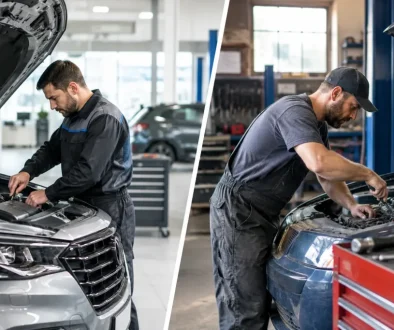


European Car Diagnostics for Clearer Answers
A warning light on a European vehicle rarely tells the whole story. It may point to an issue in one system, while the actual cause sits elsewhere – such as a weak battery affecting control modules, a sensor reading outside its normal range, or a transmission fault beginning to affect how the engine performs. Thorough European car diagnostics turn that vague warning into a clear, practical next step.
For drivers in Ringwood and Melbourne’s eastern suburbs, the goal is not simply to clear a fault code and send the car on its way. It is to understand what the vehicle is reporting, confirm the cause through professional testing, and recommend repairs or maintenance that protect safety, reliability and long-term performance.
Why European vehicles need a considered diagnostic approach
Modern European cars are built around a network of electronic control units. The engine, automatic transmission, brakes, steering, airbags, climate control, parking systems and infotainment can all communicate with one another. That delivers the refined driving experience many owners value, but it also means one concern can produce several related fault messages.
A dashboard warning light is therefore a starting point, not a diagnosis. A scan tool may identify a fault code related to low voltage, air flow, boost pressure, wheel speed or gearbox operation. The technician then needs to interpret that information in the context of the vehicle’s symptoms, service history and test results.
This is particularly relevant for vehicles with DSG, S-Tronic and other dual-clutch or automatic transmission systems. A message about gearbox performance may be related to fluid condition, adaptation values, clutch wear, a mechatronic concern, wiring, sensor data or an engine-side problem influencing transmission behaviour. Replacing parts without confirming the cause can add unnecessary disruption without resolving the issue.
What happens during European car diagnostics
Professional diagnostics combine the vehicle’s own data with hands-on mechanical assessment. The process begins by listening carefully to what the driver has noticed. Whether the issue occurs cold, after a long drive, under acceleration, in stop-start traffic or only when reversing can significantly narrow the investigation.
Reading codes is only the first step
Specialist diagnostic equipment communicates with the vehicle’s modules and retrieves stored, pending and historical fault codes. It can also show live data from sensors and systems while the car is operating. This helps identify patterns that a single code alone cannot explain.
For example, an engine warning light may be accompanied by readings that show an intermittent misfire, an air leak, an emissions-system concern or an electrical supply issue. A warning related to ABS or stability control may require checks of wheel-speed signals, wiring condition and the underlying braking system. The code describes where the system noticed a problem, not always the part that has failed.
Testing confirms the real cause
Once the initial scan is complete, further checks may include battery and charging-system testing, visual inspections, road testing where appropriate, fluid assessment and targeted electrical tests. Technicians may compare live readings against expected values and inspect connectors, hoses, sensors or components relevant to the fault.
This methodical approach matters because intermittent issues are common. A car may drive normally during one short trip, yet display a warning after rain, when hot, or during heavy traffic. Capturing the conditions around the concern and testing carefully provides a more dependable basis for repair recommendations.
Clear advice should follow
A quality diagnostic assessment should leave you with plain-English information: what has been found, how urgent it is, what work is recommended and what may need monitoring. Not every stored code means a major repair is required immediately. Equally, a vehicle that still feels driveable may have a developing fault that should not be ignored.
At Ringwood Auto Tech, the focus is on giving owners practical advice so they can make informed decisions about their vehicle’s care. That includes explaining the relationship between a reported fault and the recommended repair, rather than relying on technical language alone.
Signs your vehicle should be checked
Some faults arrive with an obvious warning light. Others appear gradually through changes in how the vehicle starts, drives, shifts or responds. Booking diagnostic assessment early can help prevent a small concern from becoming a larger interruption to your routine.
Pay attention if the engine light stays on, the vehicle enters reduced-power mode, starting becomes slow or inconsistent, fuel use changes noticeably, or the engine runs roughly. Also take notice of vibration, hesitation, unusual smoke, persistent warning messages or a burning smell.
Transmission symptoms deserve timely attention, especially in DSG and dual-clutch vehicles. Delayed engagement when selecting drive or reverse, shuddering during take-off, harsh or erratic shifts, slipping, transmission warning lights and unusual noises are all reasons to arrange an inspection. These symptoms do not automatically mean the gearbox needs major repair, but they do require accurate assessment before the issue progresses.
Brake, steering and safety-system warnings should be treated with extra care. If the vehicle displays a red warning light, has reduced braking performance, feels unsafe to steer or has a significant loss of power, stop driving when it is safe to do so and seek professional advice. Safety concerns should never be left until the next routine service.
Common causes behind warning lights and drivability faults
European vehicles can develop the same everyday wear-and-tear issues as any other car, including worn brakes, ageing batteries, tyre concerns and suspension wear. Their advanced systems can also be sensitive to voltage, fluid condition and accurate service intervals.
A battery near the end of its useful life can cause more than difficult starting. Low voltage may lead to multiple warning lights or communication faults between modules, particularly after the vehicle has been sitting. A proper battery and charging-system test helps distinguish a supply problem from a fault within another system.
Sensors and actuators are another common area of investigation. They provide vital information about engine temperature, air flow, exhaust emissions, boost pressure, wheel movement and transmission operation. However, a sensor-related code can sometimes be caused by damaged wiring, contamination, a mechanical issue or a system operating outside its expected range. Testing the surrounding system prevents assumptions.
Service requirements also matter. Manufacturer-specified fluids, filters and maintenance procedures support the operation of modern engines and automatic transmissions. In DSG and S-Tronic systems, correct fluid and filter servicing can be an important part of ongoing care where applicable to the vehicle. The right interval depends on the model, transmission type, driving conditions and service history.
Why generic code clearing is not a lasting fix
Clearing a warning light may temporarily remove the message, but it does not repair the condition that caused it. If the issue remains, the vehicle will often detect it again and store another code. More importantly, clearing codes can remove useful information that helps identify intermittent faults.
There are occasions when a code has been stored after an isolated event, such as a temporary voltage drop. Even then, the sensible course is to check why it occurred, assess whether the code returns and confirm that the vehicle is operating correctly. A professional diagnostic process separates a one-off event from a fault that needs attention.
Helping your technician diagnose the issue faster
You do not need technical knowledge to assist with diagnostics. The most useful information is what you experienced and when it happened. Mention whether the warning appeared after refuelling, during wet weather, on a freeway drive, while parking or after the car had been unused. If a message appears briefly, a photo taken safely once parked can also be helpful.
Be ready to describe sounds and sensations rather than trying to name the part involved. A vibration through the steering wheel, a clunk over bumps, a pause before changing gear or a whistle under acceleration gives the technician meaningful clues. Sharing recent servicing, repairs or battery replacement details can be useful too.
Protecting reliability between diagnostic visits
The best time to investigate a new warning is usually before it becomes urgent. Keep up with scheduled servicing, respond to changing driving behaviour and avoid treating dashboard messages as an inconvenience to be dismissed. For European cars with complex transmissions and electronics, preventative attention can preserve the smooth, confident drive you expect.
If something does not feel right, trust that instinct and arrange a professional assessment. Clear answers, careful testing and honest advice provide the peace of mind to keep your vehicle safe, reliable and ready for the kilometres ahead.