Transmission Specialist Review That Builds Trust
A transmission problem rarely announces itself at a convenient time. It may begin with a slight hesitation on the school run, a shudder in stop-start traffic or a warning light before a longer drive. A useful transmission specialist review should help drivers look beyond a star rating and understand whether a workshop has the diagnostic capability, communication standards and care needed for such an important part of the vehicle.
For drivers in Ringwood and Melbourne’s eastern suburbs, the right specialist is not simply someone who can work on a gearbox. It is a workshop that listens carefully, investigates the concern properly and explains the recommended work in plain language. That approach protects your vehicle, your time and your peace of mind.
What a transmission specialist review should tell you
Reviews are most helpful when they describe the customer’s experience, rather than offering only a short statement of approval. Look for comments that mention clear explanations, accurate fault finding, professional service and a vehicle that drives correctly after the work is completed.
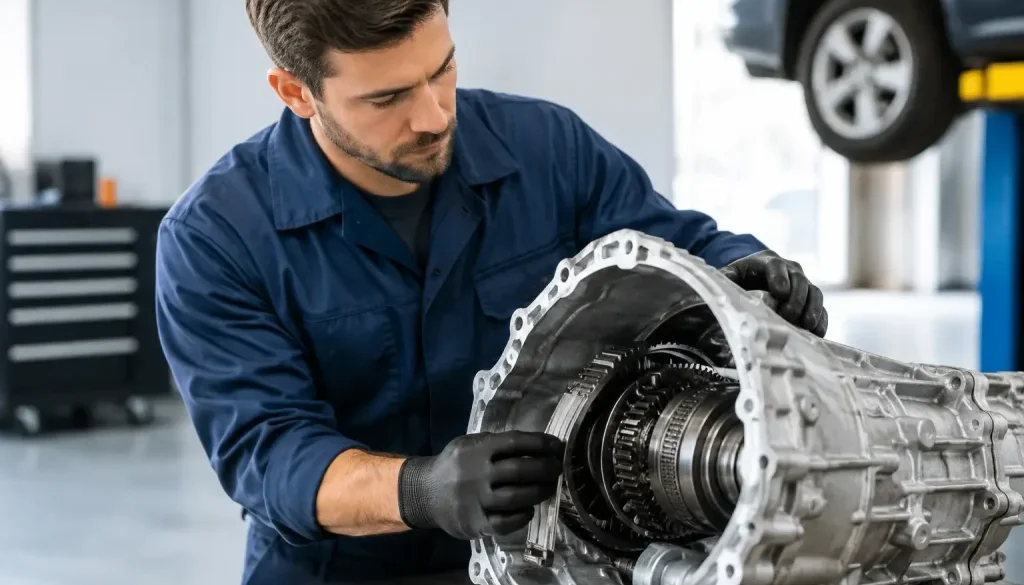
A modern automatic transmission is a sophisticated system. In a conventional automatic, dual-clutch transmission, DSG or S-Tronic system, the concern may involve mechanical components, hydraulic pressure, electronic controls, software or the condition of the transmission fluid. The same symptom can have several causes. A rough shift does not always mean a gearbox needs major repair, but it should never be dismissed without proper assessment.
The strongest feedback often reflects a workshop’s process. Customers may describe being kept informed, receiving practical advice or having the work explained without confusing jargon. These details matter because quality transmission care depends on informed decisions at every stage, not assumptions.
It is also worth considering whether reviews are specific to the type of vehicle or transmission involved. European vehicles with DSG, DCT and S-Tronic systems have particular servicing requirements. A specialist familiar with these systems is better placed to recognise common patterns, use appropriate diagnostic equipment and recommend maintenance that suits the vehicle.
Signs of a trustworthy transmission specialist
A dependable specialist starts with questions. When did the issue begin? Does it occur while cold, after the car has warmed up, under acceleration or when selecting reverse? Has a warning light appeared? Has the transmission been serviced according to the manufacturer’s schedule? These details give the technician a clearer starting point and show that your concerns are being taken seriously.
From there, a professional assessment may include a road test, a scan for fault codes, checks of live operating data and an inspection of related components. Engine performance, battery condition and control modules can affect how a transmission behaves. Good diagnostics consider the full vehicle rather than treating every shift concern as an isolated gearbox failure.
Clear communication is equally important. You should understand what has been found, what further testing may be needed and why a particular repair or service is recommended. There can be more than one suitable path forward. For example, a transmission fluid and filter service may be appropriate preventive maintenance for one vehicle, while another with internal faults may require more extensive attention. The difference comes down to the vehicle’s symptoms, service history and diagnostic results.
Trust is built when the workshop is honest about that difference. A specialist should not overstate a fault before testing is complete, nor leave you to interpret technical information on your own. Straightforward advice helps you make decisions with confidence.
Expertise matters with DSG and dual-clutch systems
Dual-clutch transmissions combine fast, efficient gear changes with complex control systems. They rely on precise interaction between clutches, mechatronic components, sensors and software. When something is not operating as intended, drivers may notice delayed engagement, harsh changes, juddering, a loss of drive or a transmission warning message.
These symptoms deserve specialist attention, but they do not all point to the same repair. A fault may relate to servicing needs, clutch wear, a mechatronic unit concern or another issue affecting transmission operation. Accurate diagnosis is essential before work begins.
This is where experience with the specific transmission type makes a genuine difference. A workshop that regularly services DSG, DCT and S-Tronic systems understands the importance of correct fluid specifications, servicing intervals and careful diagnostic procedures. It can also explain the findings in terms that make sense to an everyday driver, not only a technician.
Why maintenance deserves a place in every review
Many transmission concerns can be less disruptive when regular maintenance is not overlooked. Like engine oil, transmission fluid has an important job. It helps with lubrication, cooling and hydraulic operation. Over time, fluid condition can change and filters can become less effective, depending on the transmission design and driving conditions.
The right service interval is not identical for every vehicle. Manufacturer guidance is an important starting point, while frequent short trips, heavy traffic, towing and demanding driving conditions may also influence what your car needs. A professional workshop can check the service history and advise on the appropriate next step for your vehicle.
Preventive servicing is not a promise that a transmission will never develop a fault. Components can wear, electronic issues can occur and some problems are unrelated to fluid condition. However, timely maintenance gives the system the care it needs and creates an opportunity to identify concerns before they become harder to ignore.
When reading reviews, notice whether customers mention ongoing vehicle care as well as repairs. A workshop that takes the time to discuss servicing, brakes, tyres, battery condition and general safety is often focused on the long-term reliability of the vehicle. That is valuable for families, commuters and business owners who depend on their car every day.
Questions worth asking before you book
You do not need detailed technical knowledge to choose a transmission specialist. A few practical questions can reveal a great deal about a workshop’s approach. Ask whether the team works with your vehicle’s transmission type, what the diagnostic process involves and how they will communicate findings before proceeding.
It is also reasonable to ask whether the workshop can support you while your vehicle is being assessed or repaired. For many drivers, being without a car creates immediate pressure around work, school and family commitments. Practical conveniences, including a courtesy car where available, can make an unexpected repair far easier to manage.
Pay attention to the response. Helpful answers should be clear, patient and relevant to your circumstances. A good workshop will not rush you through the conversation. It will explain what is known, what needs checking and what happens next.
A local approach to specialist vehicle care
At Ringwood Auto Tech, transmission work is approached with the same care given to every vehicle in the workshop. The aim is to provide accurate diagnosis, professional workmanship and advice that helps customers understand their options. Whether the vehicle needs routine automatic transmission servicing, DSG diagnostics or attention for a drivability concern, the focus remains on safe, reliable operation.
For local drivers, that combination of specialist capability and personal service matters. Your car may be a daily commuter, the family vehicle, a work ute or the vehicle you have carefully maintained for years. It deserves to be assessed properly and treated as though it were our own.
A review can point you towards a trusted workshop, but the best measure is how you feel after the conversation: informed, respected and confident that your vehicle is in capable hands. If a change in shifting, warning light or unusual noise has caught your attention, arranging a professional assessment early is a practical step towards keeping your journeys safer and more dependable.