
Brake Warning Signs Explained for Safer Driving
A brake problem rarely arrives at a convenient time. It may start as a faint squeal on the school run, a steering-wheel vibration on the way to work, or a warning light that appears during a wet Melbourne afternoon. Having brake warning signs explained in plain language helps you make a calm, safe decision before a minor concern becomes a serious safety issue.
Your brakes are designed to give clear feedback when something is not right. The key is knowing which symptoms can wait for a booked inspection and which mean you should avoid driving until the vehicle has been professionally checked.
Brake warning signs explained: what to take seriously
Braking systems use several components working together, including brake pads, discs or rotors, brake fluid, hoses, calipers and electronic safety systems. A change in how the pedal feels, how the vehicle stops or what you can hear is worth attention, even if the car still seems to drive normally.
Not every noise means the same thing. For example, a brief squeal after rain can sometimes be caused by light surface moisture on the brake discs. A repeated squeal every time you brake, however, may indicate worn brake pads or another issue that needs inspection. The pattern, frequency and severity of the symptom all matter.
A warning light on the dashboard
A red brake warning light should never be ignored. Depending on the vehicle, it can indicate that the parking brake is still engaged, brake fluid is low, or there is a fault within the hydraulic braking system. If the parking brake is fully released and the light remains on, arrange professional advice promptly.
The ABS warning light is different. It generally means the anti-lock braking system has detected a fault. Your normal brakes may still operate, but the ABS function may not be available in a hard stop or slippery conditions. This reduces a valuable safety aid, particularly on wet roads, and should be diagnosed as soon as practical.
If more than one brake-related warning light appears, or the pedal feels unusual at the same time, it is sensible not to continue driving. Safety systems are interconnected, and the exact cause requires proper testing rather than guesswork.
A soft, spongy or sinking brake pedal
Your brake pedal should feel firm and predictable. If it feels soft, spongy or travels much farther than usual before the vehicle begins to slow, there may be air in the brake lines, low brake fluid, a fluid leak or another hydraulic concern.
A pedal that slowly sinks while you are holding steady pressure is also a warning sign. Do not assume it will improve on its own. Brake fluid is essential to transferring the force from your foot to the brakes at each wheel, so any suspected issue needs prompt professional attention.
Grinding, scraping or persistent squealing
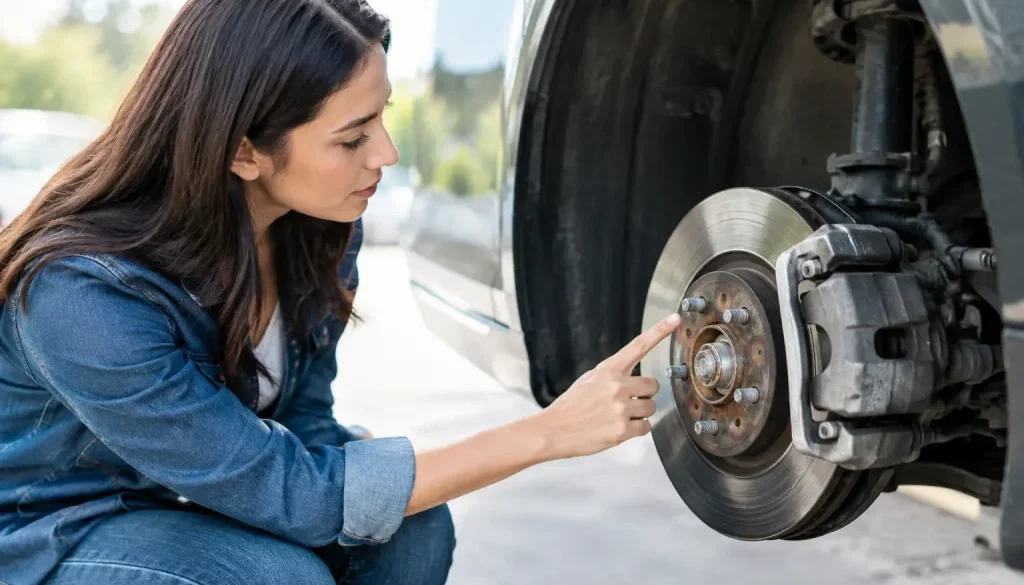
Grinding or harsh scraping when braking can mean the friction material on a brake pad has worn away, allowing metal components to contact the brake disc. Continuing to drive can damage other brake parts and, more importantly, affect stopping performance.
Persistent high-pitched squealing may be caused by a wear indicator, glazed pads, debris or brake hardware that needs attention. It is not always an emergency, but it is a good reason to book an inspection rather than wait until the noise becomes louder or is joined by vibration.
Listen for where and when the sound occurs. A noise only during the first few stops of the day can point to a different condition from one that occurs at every speed and every stop. Sharing those details with your technician helps make the diagnosis more efficient.
Pulling to one side when braking
If your vehicle pulls left or right under braking, it may indicate uneven brake operation. Possible causes include a sticking caliper, unevenly worn pads or discs, a brake hose concern, tyre issues or suspension and wheel alignment factors.
A gentle drift on a heavily crowned road is different from a consistent pull that happens every time you brake. If you need to correct the steering wheel to keep the car straight during braking, have the vehicle assessed soon. Unexpected pulling can be particularly unsettling in traffic, on wet roads or when carrying family passengers.
Vibration through the pedal or steering wheel
A pulsing pedal or vibration through the steering wheel when braking often suggests uneven brake disc surfaces or variation in braking force. Some vibration during an ABS activation in a sudden stop is normal, but regular shuddering in everyday braking is not something to dismiss.
The speed at which vibration occurs can provide useful clues. You may notice it mainly from freeway speeds, only under firmer braking, or even during low-speed stops. Regardless of the pattern, a professional inspection can determine whether the source is in the brakes or another part of the vehicle.
A burning smell, smoke or excessive heat
A sharp burning smell after normal driving, smoke near a wheel, or one wheel that seems unusually hot can point to a brake that is dragging. This may happen when a caliper does not release correctly or another component is binding.
This is not a symptom to monitor for a few more days. Pull over safely, allow the vehicle to cool and seek professional advice. Avoid touching wheels or brake components, as they may be extremely hot. Continuing to drive with a dragging brake can affect stopping performance and cause further damage.
Why brake symptoms can change from day to day
Some drivers put off an inspection because the noise has disappeared or the pedal felt normal on the next trip. Unfortunately, intermittent symptoms are common with braking systems. Moisture, temperature, traffic conditions and the amount of braking can all change how a problem presents.
A light squeal after a rainy night may clear quickly. A squeal that returns regularly, a warning light that comes and goes, or a vibration that appears only on longer trips still deserves attention. The absence of a symptom on one drive does not confirm that the underlying cause has resolved.
This is also why a proper inspection matters. Brake wear cannot always be judged from outside the wheel, and electronic warnings require diagnostic equipment to identify the stored fault information. A technician can assess pad thickness, disc condition, brake fluid, caliper operation and relevant electronic systems as part of a considered diagnosis.
When should you stop driving?
Some brake concerns allow time to book a near-term inspection, while others call for immediate caution. A mild, occasional squeal with no change in braking feel may be suitable for a prompt workshop booking. A red brake warning light, very soft pedal, grinding noise, smoke, a strong burning smell or a noticeable loss of braking response is more urgent.
If you are unsure, choose the safer option. Do not rely on pumping the brake pedal, topping up fluid or attempting a repair yourself to get through another day of driving. These actions can mask a fault without addressing its cause. Brake systems are safety-critical and should be inspected by qualified technicians using the right equipment.
Looking after brakes between services
Regular servicing gives your technician an opportunity to check brake wear and identify concerns before they affect daily driving. It is also helpful to pay attention to changes in the way your car responds, especially after a long trip, heavy stop-start traffic, towing, or driving through sustained wet conditions.
Drivers in Ringwood and Melbourne’s eastern suburbs often rely on their vehicles for commuting, school drop-offs and weekend travel. Keeping brakes in sound condition is not just about passing an inspection. It is about knowing your vehicle will respond predictably when traffic stops suddenly or conditions change.
At Ringwood Auto Tech, we treat each car as though it were our own, with clear advice on what has been found and what should be addressed. If a brake warning sign has caught your attention, arranging an inspection early can provide the reassurance you need before your next trip.