

Vehicle Safety Inspection Guide for Safer Driving
A vehicle rarely chooses a convenient time to develop a fault. A flat battery before the school run, brakes that feel different in peak-hour traffic, or a warning light before a weekend away can quickly turn a routine drive into a safety concern. This vehicle safety inspection guide explains what professional inspections look for, why they matter, and when it is time to have your car checked.
For drivers in Ringwood and Melbourne’s eastern suburbs, regular inspections are about more than avoiding unexpected repairs. They help protect the people in your vehicle, improve confidence behind the wheel, and give small concerns the attention they need before they affect reliability.
What a vehicle safety inspection covers
A professional safety inspection assesses the systems that help your vehicle stop, steer, see, communicate with other road users and remain stable on the road. The exact scope depends on your vehicle’s age, service history, condition and the reason for the inspection, but it should never be treated as a quick glance under the bonnet.
A thorough check considers the vehicle as a complete system. A worn tyre, for example, can affect braking and handling. A weak battery can cause starting issues and trigger electronic faults. A suspension concern may make the car less stable over uneven roads, particularly in wet conditions or when carrying passengers and luggage.
Brakes, tyres and steering
Your braking system is one of the first areas a technician will assess. This includes the condition of brake pads and discs, brake fluid, brake lines and hoses, and the operation of the parking brake. Drivers should arrange an inspection promptly if they notice a grinding or squealing noise, a soft or spongy brake pedal, vibration while braking, or a vehicle that pulls to one side.
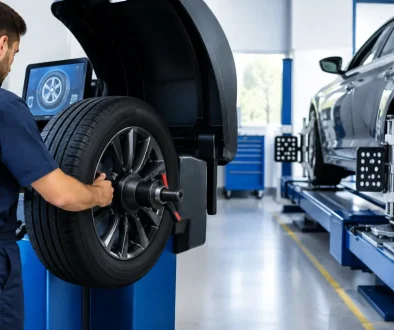
Tyres are equally critical. Their tread condition, inflation, visible damage and even wear pattern can reveal whether the vehicle has an alignment, suspension or steering issue. Proper tyre condition helps maintain grip in wet weather, supports predictable braking and reduces the risk of a tyre failure. Wheel alignment and balancing may be recommended where wear or steering behaviour points to a problem.
Steering and suspension components are checked for wear, leaks, looseness and damage. If your car feels unsettled over bumps, wanders on the road, clunks when turning, or sits unevenly, it deserves professional attention. These symptoms do not always mean a major repair is needed, but they should not be ignored.
Lights, visibility and the windscreen
Safe driving depends on being able to see clearly and be seen by others. An inspection checks the operation of headlights, indicators, brake lights, reverse lights and number plate lights. Cloudy lenses, weak globes or faulty switches can reduce visibility at night and make your intentions harder for other drivers to read.
The condition of the windscreen, wiper blades and washers also matters. Cracks and chips can spread, while worn wipers may smear rather than clear rain. Visibility becomes especially important on Melbourne’s darker winter mornings and during sudden wet-weather driving. A clear view of the road is not a convenience – it is a key part of safe vehicle operation.
Battery, engine and fluid checks
Modern vehicles rely on their electrical systems for far more than starting. Battery condition can affect charging, warning systems, lighting and electronic vehicle functions. A professional inspection can identify signs of a weak battery, corrosion around terminals or charging concerns before you are left unable to start the car.
Technicians also check for visible leaks and assess key fluids, including engine oil, coolant, brake fluid and transmission fluid where applicable. Low or deteriorated fluids may point to overdue maintenance or an underlying issue that needs diagnosis. Under-bonnet checks are particularly valuable for vehicles that complete regular short trips, sit unused for periods, tow loads, or travel in stop-start traffic.
Safety systems and warning lights
Dashboard warning lights are designed to get your attention. Some indicate a condition that should be checked soon, while others can signal a fault requiring immediate assessment. Do not assume a warning light has cleared because the vehicle seems to be driving normally. Modern safety, engine and transmission systems can store fault information that helps identify intermittent or developing problems.
This is particularly relevant for vehicles with automatic, DSG, dual-clutch or S-Tronic transmissions. Rough shifting, delayed engagement, shuddering, unusual noises or a transmission warning message should be assessed with the right diagnostic equipment. Continuing to drive with these symptoms can sometimes make a manageable issue more involved.
Vehicle safety inspection guide: when to book one
There is no single interval that suits every vehicle. Your log book service schedule is a good foundation, but a safety inspection may also be worthwhile before a longer trip, after a period of limited use, when buying a used vehicle, or if the car has started behaving differently.
It is also sensible to book a check after striking a deep pothole or kerb, particularly if you notice a change in steering, tyre wear or handling. Melbourne roads can place plenty of strain on tyres, wheels and suspension, and damage is not always obvious from the driver’s seat.
Arrange an inspection without delay if you notice one or more of the following concerns:
- A warning light remains on or appears repeatedly.
- The brakes make new noises, feel less responsive or cause vibration.
- The steering pulls, shakes or feels unusually heavy.
- There is a fluid leak, burning smell or unusual noise.
- The engine runs roughly, loses power or struggles to start.
- The transmission shifts harshly, hesitates or shudders.
A prompt inspection is not about assuming the worst. It is about getting a clear answer while the issue is easier to diagnose and before it has a greater impact on safety or reliability.
A roadworthy inspection is not the same as routine maintenance
In Victoria, a roadworthy inspection focuses on whether a vehicle meets minimum safety standards for its intended registration or transfer purpose. It is valuable, but it is not a substitute for scheduled servicing or a detailed mechanical assessment.
A vehicle can meet roadworthy requirements and still have maintenance needs that deserve attention, such as ageing fluids, a weakening battery, developing air conditioning faults or components nearing the end of their service life. Likewise, a regular service may identify safety concerns that need attention before a roadworthy certificate can be issued.
The practical approach is to keep up with manufacturer-recommended servicing and seek a licensed roadworthy inspection when one is required. This gives you a more complete picture of your vehicle’s condition rather than relying on one type of check alone.
What to expect from a trusted workshop
A good inspection should leave you better informed, not overwhelmed. The technician should explain what has been found in clear language, distinguish urgent safety items from maintenance recommendations, and answer questions about how each issue affects your vehicle.
The best recommendation is not always to replace everything at once. It depends on the condition of the part, the way you use the vehicle, your upcoming travel and whether an issue presents an immediate safety risk. Clear communication helps you make sensible decisions without guesswork.
At Ringwood Auto Tech, the focus is on treating each vehicle as though it were our own. That means professional assessment, practical advice and workmanship designed to support safe, dependable driving for local families, commuters and business owners.
Make safety checks part of owning your car
Between professional visits, pay attention to changes rather than waiting for a complete breakdown. A new sound, smell, vibration or warning light is useful information. Keeping your service records, responding to recalls and allowing time for inspections before major travel can also make vehicle care far less stressful.
Your car looks after a lot of everyday life – work commutes, school drop-offs, appointments and time with family. Giving it the benefit of a proper safety inspection is a straightforward way to protect that routine and travel with greater peace of mind.