
DSG Servicing Versus Replacement Explained
A hesitation when pulling away from the lights, a shudder in slow traffic or a warning light on the school run can quickly raise a difficult question: is this a case of DSG servicing versus replacement? The right answer is rarely based on one symptom alone. A DSG is a sophisticated dual-clutch transmission, and accurate diagnosis is the best way to protect your vehicle, avoid unnecessary work and restore confident driving.
For many drivers, a timely service is all that is needed to keep a DSG operating as intended. In other cases, wear in the clutch assembly, faults within the mechatronic unit or internal gearbox damage may call for targeted repair or replacement. Understanding the difference helps you make an informed decision when your vehicle needs attention.
What a DSG service is designed to do
A DSG, also known as a dual-clutch transmission or DCT, uses electronically controlled clutches to deliver quick, efficient gear changes. Depending on the gearbox fitted to your vehicle, it may use transmission fluid, filters, a hydraulic system and a mechatronic control unit that need specialist attention over time.
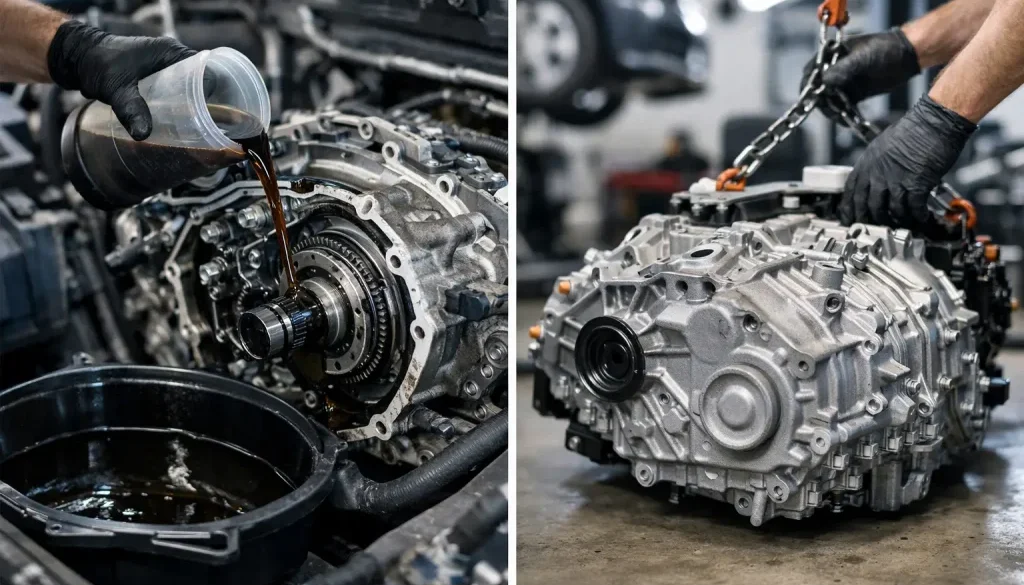
A professional DSG service generally involves inspecting the transmission system and, where specified for that gearbox, replacing the correct transmission fluid and filter. The workshop also checks for leaks, fault codes, shift quality and any signs that the transmission is not behaving as it should. The correct fluid specification, fill procedure and temperature-controlled level setting are critical. These are not ordinary engine-oil service tasks.
Servicing is preventative maintenance. It helps maintain lubrication and hydraulic performance, removes contaminants captured by the filter and gives a technician an opportunity to identify emerging concerns before they develop into a larger repair. It does not repair a worn clutch pack, a failed sensor or damaged internal components, but it can reduce the risk of problems associated with neglected maintenance.
Manufacturer service requirements vary significantly between DSG versions and vehicle models. Some wet-clutch DSG systems have scheduled fluid and filter servicing, while dry-clutch designs have different maintenance needs. Your vehicle’s service history, gearbox code and manufacturer requirements should guide the recommendation, rather than a one-size-fits-all interval.
DSG servicing versus replacement: what changes?
The central difference in DSG servicing versus replacement is the purpose of the work. A service maintains a functioning transmission. Replacement addresses a component or assembly that has worn out, failed or sustained damage.
Replacement does not always mean fitting a complete gearbox. Depending on the diagnosis, the required work may involve a DSG clutch replacement, mechatronic unit repair or replacement, internal transmission repair, or a rebuilt transmission assembly. Each option addresses a different failure point, so it is essential not to assume that every rough shift means the entire gearbox needs replacing.
A clutch pack may be the concern when there is excessive slipping, shuddering on take-off, difficulty selecting gears or clutch wear recorded in the transmission data. A mechatronic fault can cause warning lights, harsh or inconsistent changes, loss of gear selection or the transmission entering a reduced-function mode. Internal faults may be associated with ongoing noises, metal debris, fluid contamination or symptoms that remain after other faults have been resolved.
A properly maintained DSG can still require repairs as it ages. City driving, frequent stop-start use, long periods in traffic, heavy loads and driving conditions all affect how hard the clutches and transmission controls work. Maintenance matters, but it cannot prevent every component from eventually wearing.
Symptoms that deserve prompt attention
A DSG can feel different from a conventional automatic at very low speeds, particularly when manoeuvring or creeping in traffic. That alone does not necessarily indicate a fault. What matters is a change from the way your vehicle normally drives, or a symptom that is becoming more frequent.
Arrange a professional assessment if you notice repeated shuddering, jolting between gears, delayed engagement of drive or reverse, revs rising without expected acceleration, unusual transmission noises, fluid leaks or a transmission warning light. A sudden loss of drive, an inability to select a gear or a vehicle that enters limp mode should be checked without delay.
Drivers sometimes put off inspection because the symptom comes and goes. However, intermittent issues can leave useful fault information stored in the vehicle’s control modules. Early diagnosis may identify a minor electrical, hydraulic or calibration issue before it contributes to further clutch or gearbox wear.
Why diagnosis should come before a recommendation
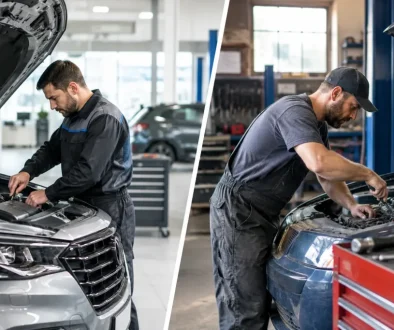
Modern DSG systems rely on mechanical parts, electronics, hydraulic controls and software working together. A road test alone cannot provide the full picture. An experienced transmission specialist will combine the driver’s description of the problem with a visual inspection, advanced scan-tool diagnostics, fault-code analysis, live transmission data and an assessment of fluid condition where applicable.
This process helps separate maintenance needs from repair needs. For example, a fault code may point towards a sensor or mechatronic concern rather than a clutch problem. Adaptation values can reveal how the gearbox is managing clutch operation. Evidence of leaks or contamination can change the repair path. It is this combination of information that supports a clear, practical recommendation.
The quality of the diagnosis matters just as much as the repair. Replacing parts without confirming the cause may not resolve the concern, particularly with complex European transmission systems such as DSG and S-Tronic units.
When servicing is likely to be the sensible path
If your DSG is driving normally, has no warning lights and is due for scheduled maintenance, servicing is the sensible way to look after it. The same applies where an inspection finds no evidence of component failure, but fluid and filter maintenance is required for the specific transmission.
Servicing may also be recommended after repairs, where appropriate, to ensure the transmission has the correct fluid condition and level. It is an investment in ongoing reliability, especially for vehicles relied upon for daily commuting, family transport or business travel.
When repair or replacement may be necessary
Repair or replacement becomes more likely where testing confirms worn clutches, a failed mechatronic unit, internal damage or an issue that cannot be corrected through servicing and approved transmission procedures. The exact remedy depends on the gearbox type, the fault found and the condition of the rest of the transmission.
A targeted repair can be appropriate when the fault is isolated and the remaining transmission is in sound condition. A broader rebuild or replacement may be considered if multiple internal components are damaged or wear is extensive. The goal should be a reliable repair suited to the vehicle, not simply the largest possible job.
Protecting your DSG between workshop visits
The most useful step is to follow the servicing schedule appropriate to your vehicle and keep records of completed transmission work. If the vehicle starts behaving differently, arrange an inspection rather than waiting for the next general service.
Avoid treating warning lights, repeated shuddering or rough gear changes as normal. A DSG is designed to make driving easier, and a well-functioning unit should feel predictable and responsive. Bringing the vehicle in early gives your technician more opportunity to diagnose the issue accurately and discuss the most appropriate option.
For drivers in Ringwood and Melbourne’s eastern suburbs, Ringwood Auto Tech can assess DSG, S-Tronic and other automatic transmission concerns with specialist diagnostics and straightforward advice. Whether your transmission is due for maintenance or showing a genuine fault, the next best step is a careful assessment that treats your car as though it were our own.