DSG vs Torque Converter – Which Is Right for You?
A transmission can make the same car feel entirely different on the morning school run, in stop-start traffic on Canterbury Road, or when joining the Eastern Freeway. The DSG vs torque converter question is not simply about which gearbox changes gear faster. It is about driving feel, the way each system manages heat and load, and how well it suits the vehicle and the way you use it.
Both designs are proven automatic transmission technologies. Neither is automatically the better choice for every driver. Understanding the differences can help you recognise what is normal in your vehicle, keep up with the right servicing, and act early if the gearbox starts behaving differently.
What is a DSG gearbox?
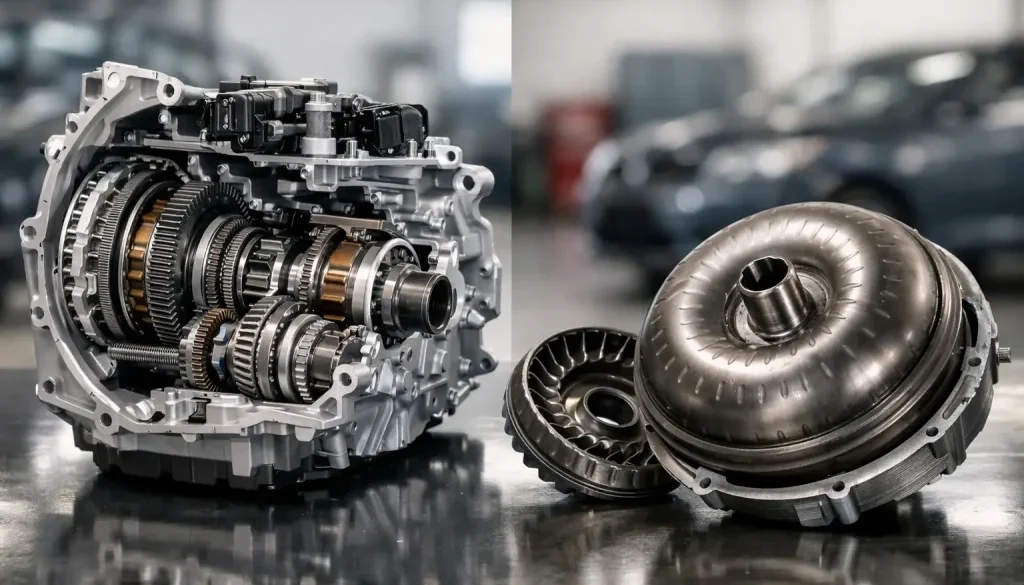
DSG stands for Direct-Shift Gearbox. It is a type of dual-clutch transmission, also called a DCT. Rather than using one clutch like a manual gearbox, it uses two clutches and two gear sets. One clutch manages the odd-numbered gears, while the other manages the even-numbered gears.
This arrangement allows the transmission to prepare the next likely gear before the change happens. When you accelerate, it can shift from one gear to the next with very little interruption to power. That is why many drivers notice a crisp, responsive feel, particularly when the vehicle is moving freely.
DSG systems are common in many European vehicles, including models fitted with S-Tronic or other manufacturer-specific dual-clutch systems. There are different DSG designs, including wet-clutch and dry-clutch versions. Wet-clutch units use transmission fluid to cool and lubricate the clutch components, while dry-clutch systems have a different operating design and service requirement. The exact gearbox fitted to your vehicle matters far more than the badge on the boot.
A DSG is controlled by sophisticated electronics and hydraulic components, often referred to as the mechatronic unit. This is one reason accurate diagnosis matters. A hesitation or warning light may relate to the clutches, hydraulic control, sensors, software, fluid condition or another issue affecting drivability.
What is a torque converter automatic?
A conventional automatic transmission uses a torque converter between the engine and gearbox. The torque converter is a fluid coupling that transfers engine power into the transmission, allowing the vehicle to idle while stopped and pull away smoothly without a manual clutch pedal.
Modern torque converter automatics are far more advanced than their older counterparts. Many have multiple gear ratios, electronic controls and a lock-up function that reduces slip at cruising speeds. They can be smooth, efficient and well suited to everyday driving, towing applications and regular stop-start conditions, depending on the vehicle’s design.
Because power transfer happens through fluid at low speeds, a torque converter automatic often feels gentler when taking off, creeping in traffic or parking. The shift quality is generally less abrupt than a dual-clutch gearbox, although modern units can still respond quickly when needed.
DSG vs torque converter: the driving difference
The biggest difference most drivers notice is the way the vehicle starts moving and changes gears.
A DSG often feels more direct because its clutches connect engine power in a similar way to a manual gearbox. Under steady acceleration, shifts can be fast and precise. In a performance-focused vehicle or on open roads, this can make the car feel alert and engaging.
At very low speed, however, a DSG may feel different from a traditional automatic. Gentle clutch engagement, crawling in heavy traffic and manoeuvring into a tight parking space can sometimes produce a slight pause or a more mechanical sensation. A small amount of this behaviour may be characteristic of the system, particularly while the gearbox is cold. It should not be confused with repeated shuddering, harsh engagement or a clear loss of drive.
A torque converter automatic is usually smoother from rest. It is often more forgiving in urban traffic because the fluid coupling naturally cushions low-speed movement. For commuters and families who spend plenty of time in congestion, that relaxed behaviour can be appealing.
That said, the best choice depends on the individual vehicle. A well-calibrated DSG can be excellent in daily use, and a modern torque converter can be responsive and efficient. The condition of the transmission and its maintenance history will have a major effect on how either one performs.
Maintenance needs are not interchangeable
Transmission servicing is one area where assumptions can become expensive. A DSG gearbox and a torque converter automatic do not necessarily use the same fluid, filter arrangement, service process or inspection requirements.
Many wet-clutch DSG transmissions require scheduled fluid and filter changes using the correct specification. The fluid does more than lubricate internal parts. It can also support cooling and hydraulic operation, so fluid condition is critical to the health of the gearbox and mechatronic system. Dry-clutch DSGs have different requirements and still benefit from professional assessment when symptoms appear.
Torque converter automatics also rely on correctly specified transmission fluid. Over time, heat, driving conditions and normal wear can affect fluid performance. Depending on the transmission design, servicing may involve fluid replacement, filter work and an inspection for leaks or signs of internal wear.
For either transmission, it is wise to follow the manufacturer’s service requirements and take account of real-world use. Frequent short trips, heavy traffic, towing, steep roads and sustained high temperatures can place extra strain on an automatic gearbox. Keeping clear service records gives your technician a stronger starting point if a concern develops later.
Warning signs worth checking early
An occasional different shift after a cold start is not always a fault. But a change from your vehicle’s usual behaviour deserves attention. Waiting for a minor issue to become a major drivability concern can limit repair options.
Arrange a professional transmission inspection if you notice repeated shuddering when taking off, delayed engagement when selecting Drive or Reverse, harsh or erratic gear changes, slipping or flaring engine revs, transmission warning messages, fluid leaks, unusual noises, or a sudden reduction in performance. A burning smell after driving or the vehicle entering a reduced-power mode should also be checked promptly.
These signs do not point to one diagnosis on their own. For example, a shudder can be related to clutch operation, fluid condition, engine performance, mounts or electronic control. Proper diagnostics are essential before any repair recommendation is made.
Choosing the right gearbox for your driving
If you are comparing vehicles, think about how and where the car will be used rather than relying on a broad reputation for either design. A driver who values sharp response and enjoys open-road driving may prefer the character of a DSG. Someone who spends most weekdays in dense traffic and wants especially gentle low-speed behaviour may lean towards a torque converter automatic.
Vehicle size, engine output and intended use also matter. A small European hatch, a family SUV and a work vehicle may each use a different transmission design for good reasons. There is no need to avoid a vehicle purely because it has a DSG or torque converter. A complete service history, smooth operation on a proper road test and specialist assessment where needed are more useful indicators.
For owners in Ringwood and Melbourne’s eastern suburbs, a transmission concern does not have to mean guessing at the cause. Ringwood Auto Tech can assess DSG, dual-clutch, S-Tronic and conventional automatic transmission concerns with clear advice based on the vehicle in front of us.
The practical answer
A DSG offers quick, direct gear changes and can be very rewarding to drive. A torque converter automatic generally delivers a softer, more traditional automatic feel, especially at low speed. Both can provide dependable service when maintained correctly and diagnosed by technicians who understand their specific systems.
The most helpful habit is simple: learn what normal feels like in your own car, keep its transmission servicing up to date, and have any new shudder, delay or warning message checked before it interrupts your routine. That approach gives you the best chance of preserving smooth, safe and reliable motoring.