
When to Visit a Suspension Repair Workshop
A rough ride is not always just part of owning an older car. If your vehicle bounces after a speed hump, pulls through corners or feels unsettled on uneven roads, a suspension repair workshop can identify what is causing the change and help restore safe, predictable driving. For drivers in Ringwood and Melbourne’s eastern suburbs, that matters every day – from school runs and freeway commutes to wet-weather driving and weekends away.
Your suspension does far more than make the cabin feel comfortable. It helps keep the tyres in proper contact with the road, supports stable braking and steering, and manages the forces created by bumps, turns and loads. When a component wears out, the problem can develop gradually, making it easy to overlook until handling, tyre wear or stopping performance is affected.
What your suspension system is doing
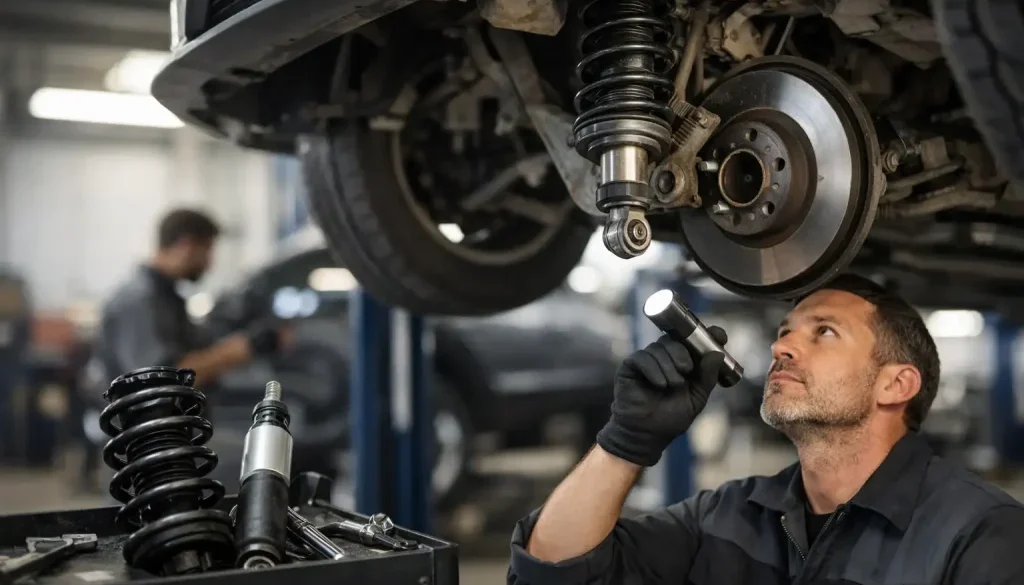
Suspension is a system rather than a single part. Shock absorbers or struts control the movement of the springs, while components such as control arms, bushes, ball joints, links and mounts help position the wheels correctly and allow them to move as intended. Wheel alignment is closely connected too, because worn parts can alter the angles at which tyres meet the road.
On a well-maintained vehicle, these parts work together quietly in the background. The car settles quickly after bumps, remains composed when changing direction and feels stable under braking. Of course, every vehicle has its own character. A compact hatch, family SUV and work ute will not ride the same way. The concern is a noticeable change from how your own vehicle normally feels.
Poor road surfaces, potholes, kerb strikes and regular driving over speed humps can all place extra strain on suspension parts. Age and kilometres also take their toll, particularly on rubber bushes and dampers that gradually lose their ability to control movement.
Signs you should book a suspension inspection
A vehicle does not need to be making a dramatic noise before it deserves attention. Many suspension concerns begin with small changes that become more obvious over time. If you notice one symptom, it may not automatically mean a major repair is required, but it is worth having a qualified technician assess it.
Common signs include:
- Excessive bouncing or a floating feeling after driving over bumps
- Knocking, clunking or rattling noises over rough roads or speed humps
- A vehicle that dips sharply when braking or leans more than usual in corners
- Uneven, scalloped or unusually fast tyre wear
- Steering that feels vague, heavy, off-centre or less stable than normal
- A pull to one side, vibration through the steering wheel or a crooked steering wheel
- Fluid leaking from a shock absorber or strut
- A vehicle sitting lower on one corner than the others
Some of these symptoms can also be related to tyres, wheel balance, braking components or steering issues. That is exactly why diagnosis matters. Replacing parts based on a guess can leave the underlying problem unresolved. A professional inspection considers the whole vehicle system before recommendations are made.
Changes in wet weather deserve attention
A worn suspension system can be especially noticeable when roads are wet. Tyres need consistent contact with the surface to provide grip for braking, steering and cornering. If a vehicle is unsettled, bounces excessively or feels less composed in the rain, arrange an inspection rather than assuming new tyres alone will solve it.
Tyres remain crucial, but they can only perform as well as the suspension and alignment allow. Looking at these areas together gives a clearer picture of the vehicle’s road holding and safety.
What happens at a suspension repair workshop?
A proper suspension assessment starts with listening. The most useful information often comes from the driver: when the noise occurs, whether it happens while turning or braking, if it is worse with passengers or cargo, and whether the vehicle recently hit a pothole or kerb.
Technicians then inspect relevant components for wear, damage, leaks and excessive movement. They may check shocks or struts, springs, mounts, bushes, control arms, ball joints, sway bar links, steering components, tyres and wheel alignment angles. Depending on the symptoms, a road test and diagnostic checks may also be appropriate.
The purpose is not simply to find a worn part. It is to understand how that part is affecting the vehicle and whether related components should be addressed at the same time. For example, fitting new shock absorbers without checking tyre condition and alignment may mean the vehicle does not achieve the improvement it should.
At Ringwood Auto Tech, the focus is on clear recommendations that suit the vehicle’s condition and intended use. If an item needs attention for safety, it should be explained plainly. If another component can be monitored at a future service, that should be made clear too. This helps drivers make informed decisions without unnecessary surprises.
Suspension repairs are not one-size-fits-all
The right repair depends on the vehicle, its condition and the source of the concern. Some vehicles need replacement shocks or struts because damping has deteriorated. Others may have worn bushes causing noise and unstable steering, or damaged control arms and ball joints affecting wheel alignment and tyre wear.
There are also cases where more than one issue is present. A pothole impact, for instance, can affect a tyre, wheel, alignment and suspension component at once. Repairing only the obvious damage can leave a subtle pull or uneven tyre wear behind.
For vehicles that carry family loads, tools or regular equipment, the vehicle’s normal load should be part of the conversation. A suspension system that feels acceptable when empty may behave differently when the boot is full or passengers are on board. Similarly, owners of performance-oriented European vehicles may be more aware of handling changes, while drivers of older cars may prioritise stability, comfort and reliable everyday transport. Both needs deserve careful assessment.
Why wheel alignment often follows suspension work
Many suspension components influence wheel geometry. Once worn or damaged parts are replaced, wheel alignment may be needed to ensure the tyres point and sit correctly. This supports stable steering and helps protect tyre life.
Alignment is not a substitute for repairing worn parts. If a bush, joint or control arm has excessive play, an alignment may not hold accurately. The repair should come first, followed by alignment where required. It is a practical step that helps make sure the work delivers the intended result.
The cost of waiting can show up elsewhere
Not every suspension concern is urgent, but leaving symptoms unchecked for too long can create avoidable problems. Worn shocks may contribute to uneven tyres. Worn bushes or joints can allow unwanted movement that affects steering precision and alignment. A vehicle that dips heavily under brakes or feels unstable through a corner may also reduce driver confidence when quick decisions are needed.
There is a difference between monitoring a minor concern and continuing to drive with a known safety issue. A professional inspection gives you that distinction. It can help you understand what needs prompt action, what should be planned soon and what can simply be watched at regular servicing.
This approach is particularly valuable before a roadworthy inspection, a longer trip or a period of heavy vehicle use. It is easier to organise maintenance at a convenient time than to deal with worsening handling or tyre damage when you rely on the car most.
Looking after suspension between services
Drivers do not need to diagnose suspension faults themselves, but a few everyday habits can help identify changes early. Pay attention to new noises, changes in ride height, steering behaviour and tyre wear. If you strike a severe pothole or kerb, have the vehicle checked if it begins to pull, vibrate or handle differently afterwards.
Regular servicing is also a sensible opportunity to have suspension, steering, tyres and brakes considered together. These systems share the same job: helping your vehicle respond safely and consistently on the road. Keeping them in good condition supports peace of mind for you, your passengers and everyone around you.
A car should feel settled, controlled and trustworthy, not like it is fighting the road beneath it. If yours feels different, an inspection at a trusted suspension repair workshop can provide clear answers and practical care before a small change becomes a bigger interruption to your day.