

When Your Car Needs a Wheel Alignment Service
A car that pulls towards the kerb on Canterbury Road, feels unsettled through a bend or chews through tyres faster than expected is telling you something. A professional wheel alignment service checks that your wheels are correctly positioned for the road, helping your vehicle steer predictably, handle safely and get the most from its tyres.
For drivers in Ringwood and Melbourne’s eastern suburbs, alignment is easy to overlook because the change is often gradual. You may become used to holding the steering wheel slightly off-centre or correcting the car as you travel. That does not make the issue normal. It is a good reason to have the vehicle inspected by an experienced technician.
What a wheel alignment service actually checks
Wheel alignment is not the same as wheel balancing. Balancing addresses uneven weight distribution in a wheel and tyre assembly, which can cause vibration at certain speeds. Alignment concerns the direction and angle of the wheels in relation to each other and the vehicle’s specifications.
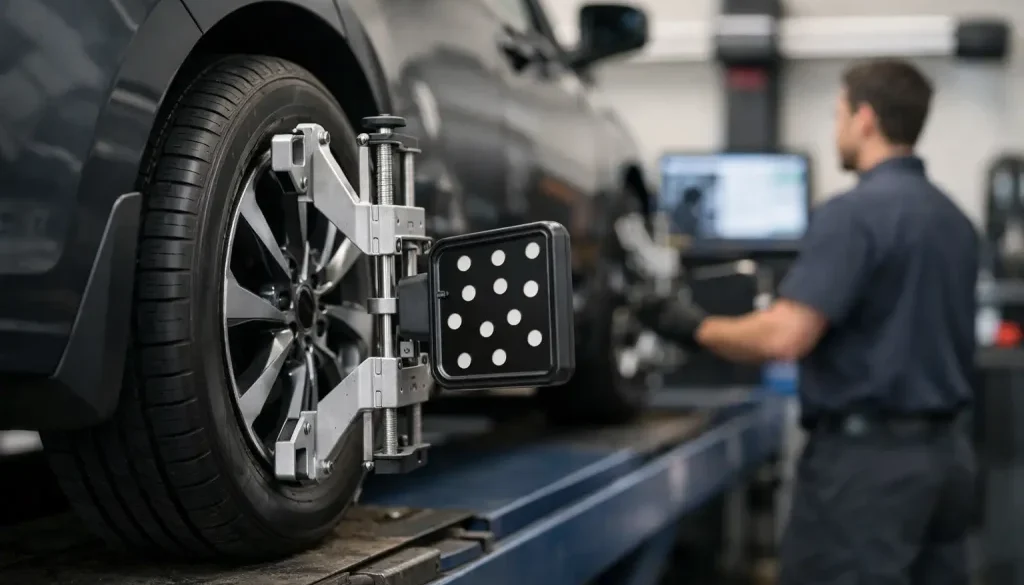
During a wheel alignment service, a technician measures key suspension and steering angles, including toe, camber and caster where applicable. These settings affect how the tyres sit on the road, how readily the vehicle returns to centre after a turn and how stable it feels when travelling straight ahead.
The aim is not simply to make the steering wheel look straight. Your vehicle’s alignment settings must be checked against the manufacturer’s requirements and adjusted carefully where adjustment is available. This helps ensure the tyres meet the road evenly and the vehicle responds as intended.
Modern cars can have sophisticated suspension layouts, driver-assistance systems and vehicle-specific alignment requirements. European vehicles, family SUVs, utes and everyday commuter cars can all need a slightly different approach. That is why accurate equipment, correct specifications and a proper inspection matter.
Signs your car may need wheel alignment
A noticeable pull to one side is the sign most drivers recognise, but it is not the only one. Road camber, tyre pressures and wind can influence how a car feels, so a brief drift on a particular road does not automatically mean the alignment is out. A consistent pull across suitable, reasonably level roads is worth checking.
Look out for a steering wheel that sits off-centre while you are driving straight, a vehicle that feels vague or unsettled, or tyres that squeal more readily around corners. Uneven tyre wear is another strong warning sign. Wear on one inner or outer edge can indicate an alignment concern, although worn suspension components or incorrect tyre pressures may also contribute.
Vibration through the steering wheel is more commonly associated with wheel balancing, tyre damage or other mechanical concerns than alignment alone. Even so, it should not be ignored. A professional inspection can identify whether alignment, balancing, tyres, brakes, suspension or steering needs attention.
After potholes, kerbs and repairs
Melbourne roads can be unforgiving. A pothole strike, a heavy impact with a kerb or regular travel on rough surfaces can knock alignment out of specification. The effect may be immediate, or it may show up later as uneven tyre wear or less precise steering.
It is also sensible to check alignment after suspension or steering repairs, replacing worn shocks or struts, fitting new tyres, or changing components that affect wheel position. New tyres deserve the best possible start. If the alignment is incorrect, they can wear unevenly long before their time.
Why correct wheel alignment matters
Tyres are one of the most important safety components on your car. They provide the contact between the vehicle and the road when you brake, turn and drive in wet conditions. When alignment is incorrect, a tyre may scrub across the road instead of rolling cleanly in the direction of travel. That creates unnecessary wear and can reduce grip over time.
Correct alignment also supports comfortable, confident driving. A vehicle that tracks straight is less tiring to drive, particularly on longer trips, the Eastern Freeway or busy suburban routes. You should not need to constantly correct the steering to keep your car in its lane.
There can also be a flow-on benefit for fuel use. Misaligned wheels create additional rolling resistance, although the extent varies with the severity of the issue, tyre condition and driving habits. The clearest benefit is usually protecting tyre life and maintaining predictable handling.
Alignment cannot fix every steering or handling concern. If suspension bushes, ball joints, tie-rod ends, wheel bearings or other components are worn or damaged, the alignment may not hold or may not be adjustable until those issues are addressed. A trustworthy workshop will explain what has been found and why any additional work is recommended before proceeding.
How often should alignment be checked?
There is no single kilometre interval that suits every vehicle. A car used mainly for smooth freeway commuting may need less frequent attention than a family SUV regularly travelling over potholes, uneven suburban streets and speed humps. Tyre condition, driving environment, suspension condition and recent repairs all influence the right timing.
As a practical approach, ask for your tyres and alignment to be considered during regular servicing, especially if you notice a change in steering feel or tyre wear. An inspection is also worthwhile after a significant road impact or when new tyres are fitted.
Regular checks are particularly helpful before a road trip, during a tyre replacement decision or if a roadworthy inspection identifies tyre-related concerns. Addressing a developing problem early may help prevent more extensive tyre wear and gives you a clearer picture of your vehicle’s overall condition.
What to expect from a professional inspection
A quality alignment appointment begins with more than putting the vehicle on alignment equipment. The technician should first consider tyre pressures and tyre condition, then inspect relevant steering and suspension components for movement, wear or damage. There is little value in setting alignment angles if a worn part will allow them to change again.
Once the vehicle is measured, the technician can compare its current settings with the manufacturer’s specifications and make appropriate adjustments. If an adjustment is not possible because of component condition, accident damage or the design of the vehicle, you should receive a straightforward explanation of the next steps.
At Ringwood Auto Tech, the focus is on practical advice that helps you make an informed decision about your car. Whether you drive a daily commuter, a family vehicle, a work ute or a European vehicle with more specialised suspension requirements, the goal is the same: safe, dependable handling and tyres that wear as evenly as possible.
Wheel alignment and wheel balancing: why both may matter
Alignment and balancing often come up together because both affect driving comfort and tyre life, but they solve different problems. Alignment sets the direction of the wheels. Balancing corrects weight distribution around each wheel.
If your steering wheel shakes at particular speeds, wheel balancing may be the first area to investigate. If the car pulls, the steering wheel is off-centre or tyre edges are wearing unevenly, alignment is more likely to be relevant. In some cases, both services are appropriate, particularly after fitting tyres or if the tyres have developed uneven wear.
The condition of the tyres themselves is equally important. A damaged tyre, incorrect tyre pressure or severe wear can affect how a vehicle drives and may need attention before an accurate assessment can be made.
Give small steering changes the attention they deserve
You do not need to wait until your car is difficult to control before arranging an inspection. A subtle pull, an off-centre steering wheel or unusual tyre wear can be the early sign of an issue that is far simpler to manage now than after the tyres have been prematurely worn down.
If your vehicle no longer feels as settled or predictable as it should, book a professional check and let an experienced technician assess it properly. A well-aligned car makes everyday driving feel calmer, safer and more comfortable – exactly how it should feel when you head out the driveway.



When to Visit a Suspension Repair Workshop - Ringwood Auto Tech
July 19, 2026 @ 5:32 pm
[…] joints, links and mounts help position the wheels correctly and allow them to move as intended. Wheel alignment is closely connected too, because worn parts can alter the angles at which tyres meet the […]
What Affects Shock Absorber Replacement Cost? - Ringwood Auto Tech
July 20, 2026 @ 5:32 pm
[…] wheel alignment may be recommended after suspension work, depending on the vehicle and components replaced. […]