
When to Book a Car Battery Replacement Service
A flat battery has a way of choosing the least convenient moment – the school run, an early meeting, or the trip home after work. A professional car battery replacement service does more than get the engine turning again. It identifies whether the battery is genuinely at the end of its life, checks the charging system, and fits a suitable replacement so you can get back on the road with confidence.
For drivers in Ringwood and Melbourne’s eastern suburbs, dependable starting is not something to leave to chance. Modern vehicles rely on their battery for far more than ignition. It supports electrical systems, vehicle computers, central locking, lighting and, in many cars, stop-start technology. When the battery weakens, small warning signs can quickly become a no-start situation.
Signs You May Need a Car Battery Replacement Service
The most obvious sign is an engine that cranks slowly or will not start. You may notice a laboured sound when turning the key or pressing the start button, particularly on cold mornings. A battery can still have enough power for dashboard lights and accessories while lacking the reserve needed to start the engine.
Dim headlights, flickering interior lights and electrical features that behave inconsistently can also point to a weak battery. The battery warning light should never be ignored either. While it may indicate a battery issue, it can also signal a fault in the alternator or charging circuit. Replacing the battery without proper checks may not address the underlying cause.
Other common clues include needing a jump-start, a battery case that appears swollen or damaged, corrosion around the terminals, or an electronic clock and radio that repeatedly reset. If your vehicle has stop-start and that function stops operating, a tired battery is one possible cause. However, the system can also be affected by vehicle temperature, charge level and operating conditions, so a professional assessment is the sensible next step.
Battery Age Matters, But It Is Not the Whole Story
Most car batteries have a limited service life, but there is no single expiry date that applies to every vehicle. Short trips, heavy traffic, high accessory use, heat, cold weather and long periods without driving can all shorten battery life. A vehicle used mainly for brief local trips may not give the alternator enough time to restore the energy used during starting.
On the other hand, an older battery that still tests well may not require immediate replacement. Testing its condition and reserve capacity provides a clearer answer than relying on age alone. This helps avoid replacing a battery prematurely while reducing the risk of being caught out by one that is close to failure.
What a Professional Battery Check Should Include
A battery issue is not always a battery issue. The right diagnosis looks at the complete starting and charging system, not just whether the vehicle starts on the day it arrives at the workshop.
A technician can assess the battery’s condition, test its ability to deliver starting power and inspect the terminals and connections. They can also check the alternator’s charging performance and look for signs that an electrical fault or parasitic drain is discharging the battery while the car is parked.
This distinction matters. A new battery will not stay healthy if the charging system is underperforming. Similarly, a battery that has gone flat after the vehicle has been parked for an extended period may recover after proper charging and testing, depending on its age and condition. Clear testing results allow you to make an informed decision about the next step.
Choosing the Right Replacement Battery for Your Vehicle
Not all batteries are interchangeable. The correct replacement needs to suit the vehicle’s physical battery tray, terminal layout, electrical requirements and manufacturer specifications. Fitting the wrong type can create reliability issues and, in some vehicles, affect the operation of electrical systems.
Cars with stop-start technology often require an AGM or EFB battery designed to handle frequent cycling. These batteries are built for a different workload than a conventional flooded battery. Installing a standard battery in a vehicle designed for stop-start operation may lead to reduced battery life or system faults.
European vehicles and many late-model cars may also require battery registration or coding after replacement. This lets the vehicle’s battery management system recognise the new battery and manage charging correctly. It is a detail that is easy to overlook, but it can affect performance and the lifespan of the replacement battery.
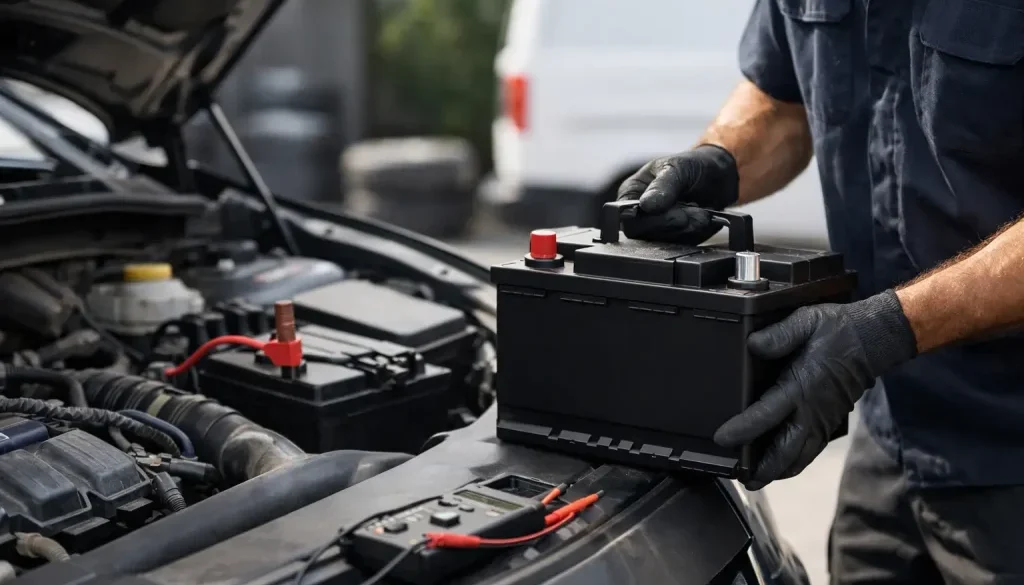
A professional car battery replacement service matches the battery to your vehicle rather than simply selecting one that fits. It also ensures terminals are secure, connections are clean and the system is checked after installation.
Why Jump-Starting Is Not a Long-Term Answer
A jump-start can be useful when you are stranded, but it is a temporary measure rather than a diagnosis. If the battery has gone flat once, it is worth understanding why. Repeated jump-starts can be inconvenient and may mask a battery, alternator or electrical issue that needs attention.
There are times when a flat battery has a straightforward explanation. Perhaps an interior light was left on, a door did not close fully, or the car has been sitting unused. Even then, a battery that has been deeply discharged can lose some capacity. If the same problem happens again, arranging an inspection is the safer option.
Modern vehicles also contain sensitive electronics. Careful professional testing is preferable to relying on repeated temporary fixes, particularly where warning lights, charging faults or intermittent electrical problems are involved.
Looking After Your New Battery
A replacement battery is a practical investment in everyday reliability, and a few habits can help it perform well. Regular driving gives the charging system an opportunity to replenish the battery. If your trips are consistently short, mention this during your next service so the battery condition can be monitored.
Keep an eye out for slow cranking, warning lights or changes in electrical performance, even after replacement. These symptoms may indicate a separate issue rather than a fault with the new battery. It is also wise to have the battery checked as part of routine vehicle servicing, especially before a busy period of travel or when colder weather arrives.
If your vehicle is not driven often, speak with a technician about the most appropriate way to maintain battery charge. The best approach depends on the vehicle, where it is stored and how long it sits between drives.
Reliable Battery Care for Everyday Driving
Whether you drive a family SUV, a commuter hatch, a work vehicle or a European car with advanced electrical systems, battery reliability supports every journey. A careful inspection can prevent a frustrating breakdown and confirm that the starting and charging system is working as it should.
At Ringwood Auto Tech, the focus is on clear advice, suitable parts and workmanship that treats each vehicle as though it were our own. If your car is slow to start, the battery warning light is on, or you are unsure about the condition of your battery, a professional check can provide the peace of mind to plan your next trip with confidence.