
What Affects Shock Absorber Replacement Cost?
A car that suddenly feels floaty over speed humps, unsettled through corners or harsh on Melbourne’s uneven roads is not simply less comfortable to drive. It may be telling you its suspension needs attention. Shock absorber replacement cost is a common concern for vehicle owners, but the right repair decision should begin with an accurate inspection of the vehicle’s condition, not a guess based on symptoms alone.
Shock absorbers play a major role in keeping your tyres in contact with the road. They control the movement of the springs, helping the car remain stable when braking, turning, carrying passengers or travelling over rough surfaces. When they wear out, the effects can build gradually, making them easy to overlook until handling and tyre wear have already been affected.
What affects shock absorber replacement cost?
The cost of replacing shock absorbers depends on the vehicle, the parts required and the work needed to return the suspension to safe operating condition. There is no one-size-fits-all answer, particularly across the broad range of passenger vehicles on the road in Ringwood and Melbourne’s eastern suburbs.
Your vehicle’s make, model and suspension design
Every vehicle has its own suspension layout. A straightforward setup on an older passenger car may require different components and labour from a late-model European vehicle, SUV, performance model or vehicle fitted with electronically controlled suspension.
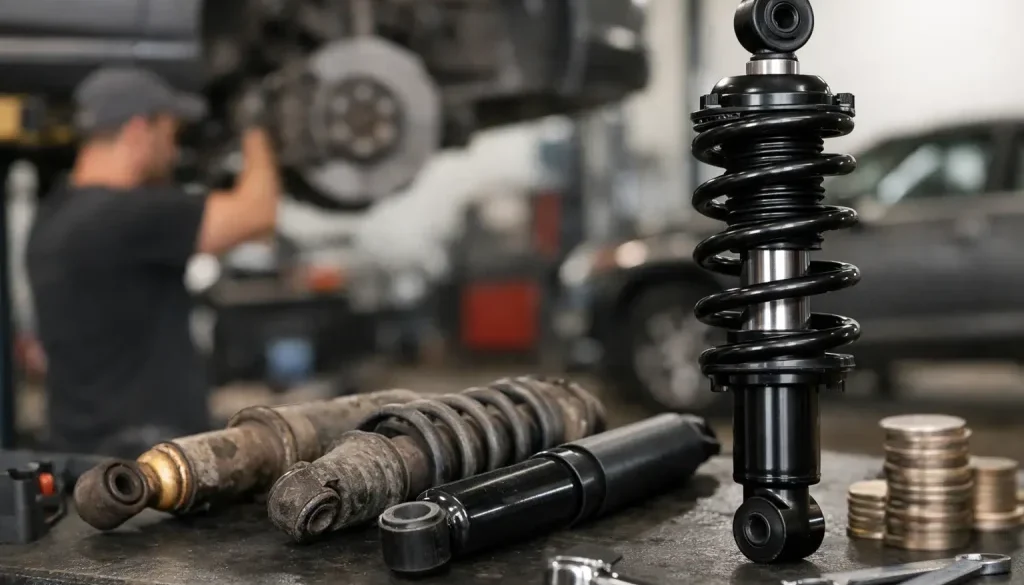
Some cars use conventional shock absorbers, while others use struts that combine the damper and spring assembly. Replacing a strut can involve additional parts and more workshop time. Vehicles with adaptive dampers, air suspension or specialised suspension systems require careful diagnosis and parts selected specifically for that system.
The front and rear suspension can also be quite different. A concern at the front of the vehicle does not automatically mean the rear requires the same work, although a technician will assess the complete suspension system before making a recommendation.
Replacing shocks in pairs
Shock absorbers are generally replaced in pairs across the same axle. If one front shock is worn or leaking, replacing both front units helps preserve balanced handling, braking stability and ride quality.
Fitting one new shock alongside one significantly worn unit can create an uneven response from side to side. That can be noticeable during cornering, braking or on wet roads. It may appear to reduce the immediate repair scope, but it is rarely the best outcome for vehicle control or long-term reliability.
Related suspension components
A worn shock absorber may not be the only issue. During an inspection, a workshop may find deterioration in related components such as top mounts, bearings, bump stops, dust boots, bushes, springs or stabiliser links. These parts are exposed to heat, vibration, water and road debris over time.
Not every replacement requires every related part. However, where a supporting component is damaged, noisy or near the end of its service life, addressing it at the same time can prevent repeat labour and help the new shock absorbers perform as intended. A clear estimate should separate essential repairs from items that can be monitored, so you can make an informed decision.
Wheel alignment and tyre condition
A wheel alignment may be recommended after suspension work, depending on the vehicle and components replaced. Alignment helps ensure the wheels are positioned correctly for predictable steering and even tyre wear.
Tyres should also be inspected. Worn shocks can contribute to uneven or scalloped tyre wear because the tyre is not being controlled consistently over bumps. New shock absorbers will improve suspension control, but they cannot restore a tyre that has already been damaged by irregular wear.
Parts quality and intended use
The correct replacement part is not always simply the first available option. Quality components suited to the vehicle’s specifications and how it is used matter. A family SUV used for school runs and weekend trips has different demands from a work vehicle that regularly carries equipment, or a European car engineered around a particular suspension calibration.
A professional workshop will consider the vehicle’s original design, kilometres travelled, driving conditions and your priorities for comfort, handling and reliability. The goal is a repair that feels right on the road and supports safe, dependable motoring.
Signs your shock absorbers may need attention
Because shock absorbers wear progressively, many drivers adjust to the change without realising how much vehicle control has declined. A few common signs are worth taking seriously.
You may notice excessive bouncing after going over a bump, a nose-dive sensation under braking, more body roll when turning, or steering that feels less settled at highway speeds. Knocking noises over rough roads, fluid leaking from a shock absorber and an unusually harsh ride can also point to suspension concerns.
Uneven tyre wear is another reason to book an inspection. It does not always mean the shocks are at fault, as alignment, tyre pressure and other suspension components can contribute. That is why diagnosis matters. Replacing parts without identifying the real cause can leave the original issue unresolved.
If your vehicle feels unstable in wet conditions, pulls during braking or seems difficult to control after hitting a bump, arrange a professional assessment promptly. These symptoms may involve the suspension, tyres, brakes or steering, all of which are central to road safety.
Why inspection comes before a firm estimate
The most useful answer to a shock absorber replacement cost question is based on what your specific vehicle actually needs. A technician should inspect the suspension for leaks, wear, damage and looseness, then assess tyre condition and listen for related noises during a road test where appropriate.
This approach avoids assumptions. For example, a clunk from the front of a car may be caused by a worn top mount or stabiliser link rather than the shock absorber itself. Likewise, a bouncy ride may involve tyre condition or spring concerns. Accurate diagnosis protects you from approving work that does not address the problem.
At Ringwood Auto Tech, the focus is on explaining the findings in plain language and recommending repairs based on safety, condition and the needs of your vehicle. You should understand what requires attention now, what can be monitored and why each recommended component is relevant.
Looking after new shock absorbers
Once replacement shock absorbers have been fitted, regular servicing remains the best way to identify developing suspension issues early. Suspension components do not have a fixed lifespan because road conditions, load, driving habits and vehicle use all make a difference.
Avoiding potholes where possible, keeping tyres inflated to the manufacturer’s recommendation and arranging an inspection when handling changes are sensible habits. If you regularly carry heavy loads, tow within your vehicle’s approved capacity or travel on rougher roads, let your technician know. That information helps them assess the suspension in the context of how the car is actually used.
A properly functioning suspension does more than smooth out the drive. It supports braking, steering response, tyre life and the confidence to carry your family or get to work safely. If your car no longer feels composed on the road, a timely inspection can provide clarity and peace of mind before a small concern becomes a bigger interruption to your routine.