
When Do Brakes Need Replacing? Key Warning Signs
Your brakes rarely stop working without warning. More often, they begin with a faint squeal at the school drop-off, a vibration through the steering wheel on the way to work, or a brake pedal that no longer feels quite right. If you are asking, “when do brakes need replacing?”, those changes are worth taking seriously. Brakes are one of your vehicle’s most important safety systems, and early attention can help prevent a small wear issue from becoming a larger repair.
For drivers in Ringwood and Melbourne’s eastern suburbs, stop-start traffic, wet winter roads, hills and regular commuting can all affect brake wear. There is no single kilometre reading that suits every vehicle. What matters is the condition of the brake components, how the car feels and whether a qualified technician identifies any safety concerns during an inspection.
When do brakes need replacing?
Brake pads and discs need replacement when they are worn beyond their safe service limits, damaged, contaminated or no longer able to provide smooth, reliable braking. A professional inspection is the only reliable way to confirm this, because wear is not always visible from outside the wheel and the warning signs can vary between vehicles.
As a general guide, brake pads commonly last anywhere from 30,000 to 70,000 kilometres. Some vehicles may need pads sooner, particularly if they spend most of their time in city traffic, carry regular loads or travel on hilly routes. Brake discs often last through more than one set of pads, but this is not guaranteed. Discs can wear, develop uneven surfaces, overheat or fall below their minimum thickness.
The key point is not to wait for a particular odometer number. Scheduled servicing and brake checks give your technician the opportunity to measure pad material, inspect disc condition and identify concerns before braking performance is affected.
Signs your brake pads or discs may be worn
A high-pitched squeal when braking is one of the most familiar warning signs. Many brake pads have a small wear indicator designed to make noise as the pad material becomes low. However, squealing is not always a definite sign of worn pads. Moisture, dust and surface glazing can also create noise, particularly after the vehicle has been parked overnight. If the sound persists, it should be checked rather than ignored.
A harsh grinding or scraping noise is more urgent. It can indicate that the pad material has worn away and metal is contacting the brake disc. Continuing to drive in this condition can damage the discs and reduce braking effectiveness. Arrange an inspection as soon as practical, and avoid unnecessary driving until the issue has been assessed.
Vibration or shudder through the brake pedal or steering wheel while slowing down can point to uneven disc wear, heat-related distortion or other brake and suspension concerns. It may be most noticeable when braking from higher speeds or on longer downhill sections. A technician needs to diagnose the cause, as the feeling alone does not confirm which component requires attention.
A brake pedal that feels soft, spongy, unusually low or different from normal also deserves prompt professional attention. This may relate to the hydraulic brake system rather than pad wear. Likewise, a vehicle that pulls to one side under braking, takes longer to stop or feels unstable should not be treated as a normal part of getting older.
Your dashboard can also provide an early warning. A brake warning light may indicate a range of issues, including low brake fluid, an electronic brake system fault or an engaged parking brake. It is not a signal to keep driving and see if it goes away. Have the vehicle inspected so the underlying cause can be identified correctly.
Why brake wear varies so much
Two identical cars can need brake work at very different intervals. Driving conditions and driving habits make a real difference. Frequent short trips through traffic involve repeated braking and less opportunity for components to cool. By comparison, a vehicle used mainly for longer freeway journeys may place less demand on its brakes.
Vehicle type matters too. A larger SUV, loaded family car, ute or business vehicle naturally requires more braking force than a lightweight hatchback. Towing, carrying equipment or regularly travelling with passengers can increase wear. Electric and hybrid vehicles may use regenerative braking more often, which can extend pad life in some situations, but their conventional braking systems still need routine inspections.
The condition of related components can also affect braking. Tyres, wheel alignment, suspension, brake fluid and calipers all play a part in how a vehicle stops and feels on the road. That is why a brake concern should be assessed as a complete system rather than assuming new pads alone will solve every noise or vibration.
Brake pads, discs and fluid all have different jobs
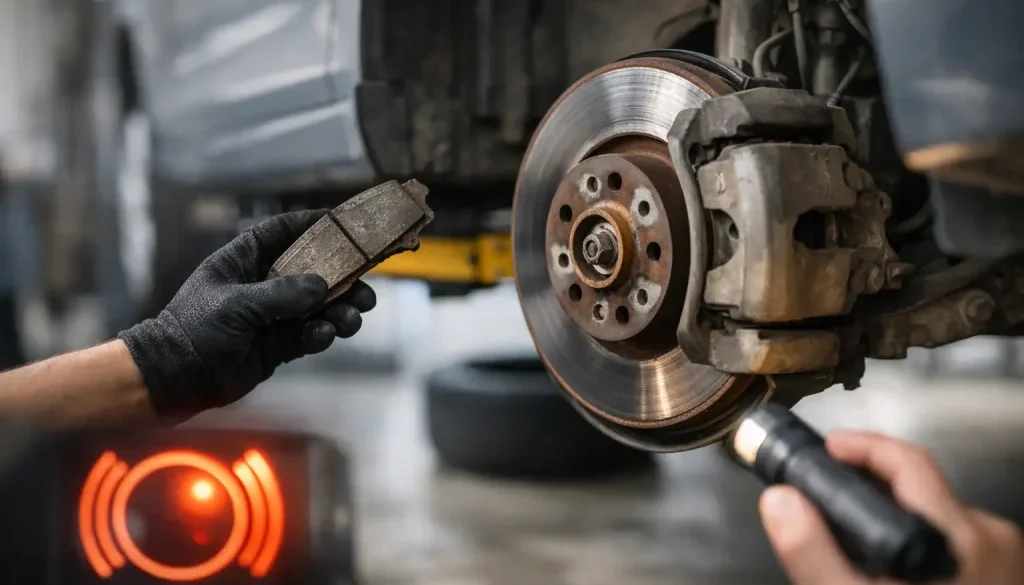
Brake pads create the friction that slows the vehicle. They are designed to wear gradually and are usually the first brake component that needs replacement. Waiting until pads are completely worn can damage the discs, so replacing them at the right time protects the rest of the braking system.
Brake discs are the metal surfaces the pads clamp onto. They must remain within the manufacturer’s thickness specification and have an acceptable surface condition. Depending on the vehicle and the level of wear, discs may need replacement with the pads. Fitting new pads to damaged or excessively worn discs can compromise smooth braking and may shorten the life of the new pads.
Brake fluid transfers force from the pedal to the brakes. Over time, it can absorb moisture, which affects its performance and can contribute to corrosion within the braking system. Fluid replacement follows the manufacturer’s recommended maintenance schedule, which is separate from pad and disc wear. It is an often-overlooked service item, but it matters for dependable braking.
Do not wait for a roadworthy inspection
A roadworthy inspection checks whether key safety items meet the required standard at the time of inspection. It is valuable, but it should not be the first time your brakes receive attention. Brake wear can develop between inspections, and a vehicle may still feel mostly normal while its pads or discs are nearing their limits.
Routine servicing is the better opportunity to monitor brake condition over time. A clear report should explain what has been measured, what is currently safe to continue using and what may require attention before the next service. This helps you plan maintenance based on the vehicle’s actual condition rather than guesswork.
If you notice grinding, a major change in pedal feel, a brake warning light or reduced stopping confidence, arrange an assessment promptly. These are not concerns to put off until your next scheduled service, especially when your car is used for family travel, daily commuting or work.
What a professional brake inspection should cover
A thorough brake inspection goes beyond looking through the wheel spokes. Technicians assess the remaining pad thickness, disc thickness and surface condition, then check for uneven wear that may suggest a sticking caliper or another issue. They also inspect brake hoses, fluid condition, caliper operation and related components where needed.
The right recommendation depends on what the inspection finds. Sometimes the answer is simply to monitor wear at the next service. Other times, replacing pads before they reach the end of their safe life is sensible preventative maintenance. If discs are below specification, scored or causing braking vibration, they may need to be addressed at the same time.
At Ringwood Auto Tech, the focus is on explaining the condition of your brakes clearly and recommending work based on safety and your vehicle’s needs. For busy households and commuters, that practical advice helps take uncertainty out of essential vehicle maintenance.
A quiet, responsive brake pedal is easy to take for granted until something changes. Pay attention to the early signs, keep up with scheduled servicing and have any new noise, vibration or warning light checked without delay. It is one of the simplest ways to protect your peace of mind every time you head out on the road.