DSG Mechatronic Unit Repair Signs to Act On
A DSG that suddenly refuses to select a gear, jolts when pulling away, or flashes a transmission warning deserves prompt attention. DSG mechatronic unit repair is often the right answer when the gearbox itself is mechanically sound but the electronic-hydraulic control system is no longer operating as it should. For drivers who depend on their vehicle for school runs, commuting and work, early diagnosis can prevent a drivability concern from becoming a more disruptive repair.
Modern dual-clutch gearboxes can deliver quick, efficient gear changes, but they are complex systems. The mechatronic unit sits at the centre of that system, coordinating hydraulic pressure, sensors, solenoids, clutch operation and gear selection. When it develops a fault, the symptoms can feel dramatic – even where the vehicle drove normally only days before.
What does a DSG mechatronic unit do?
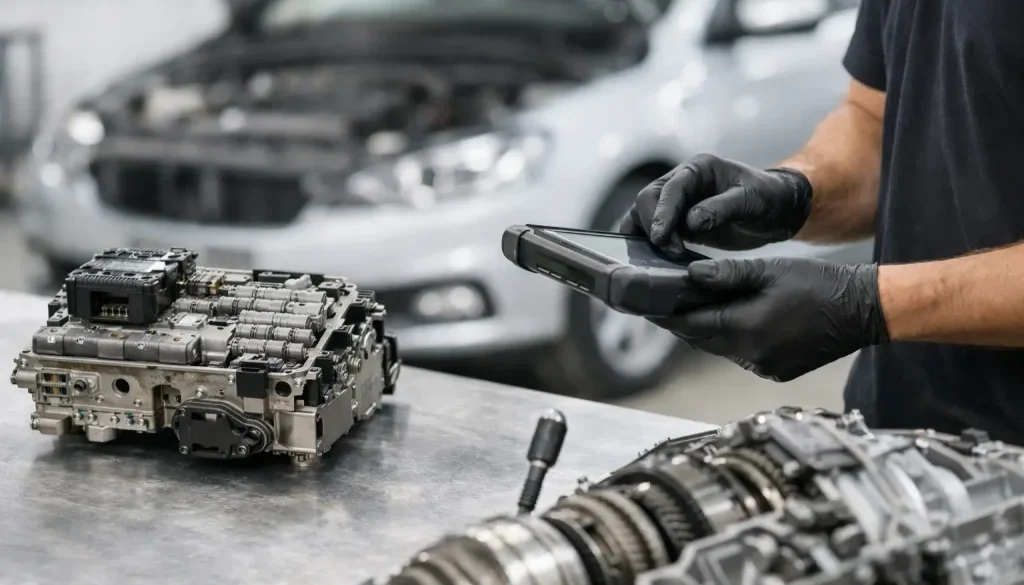
The mechatronic unit is the transmission’s control assembly. It combines electronic controls with hydraulic components to tell the DSG when to engage a clutch, select the next gear and apply the correct pressure for a smooth shift.
Rather than a conventional automatic transmission changing gears through a torque converter, a DSG uses two clutches and pre-selects gears for fast changes. The mechatronic unit manages this process constantly. It receives information from the vehicle’s sensors, makes rapid calculations and operates internal solenoids and valves accordingly.
This is why a problem with the unit can affect more than one aspect of driving. A fault may appear as rough changes, hesitation, a warning light, loss of drive or the gearbox entering a protective mode. The exact behaviour depends on the vehicle, the gearbox type and the component that has failed.
Signs your DSG needs professional attention
Some transmission concerns are intermittent at first. A warning may disappear after restarting the vehicle, or a harsh shift may only happen when the car is cold. Those details still matter. They give a transmission specialist valuable information about when and how the fault occurs.
Common signs associated with a mechatronic issue include delayed engagement when selecting Drive or Reverse, abrupt or jerky gear changes, shuddering during take-off, flashing gear indicators, an engine or transmission warning light, or a message advising that the gearbox has a fault. In more serious cases, the vehicle may be unable to select a gear or may remain in a limited operating mode.
These symptoms do not automatically confirm a failed mechatronic unit. Worn clutches, fluid condition, wiring faults, sensor issues, software concerns and internal gearbox wear can produce similar complaints. That is why replacing parts based only on a symptom can be an expensive gamble. Accurate diagnosis should come first.
Do not ignore a gearbox warning
If a warning light appears alongside a major change in shifting behaviour, it is sensible to limit unnecessary driving and arrange an assessment as soon as practical. Continuing to drive a vehicle that is struggling to engage gears can place further strain on related transmission components and may leave you without reliable drive when you need it most.
If the vehicle still drives, make a note of what happened: whether it was cold or fully warmed up, which gear was selected, whether the warning returned after restarting and any unusual noises or vibrations. This helps the technician build a clearer picture of the concern.
How DSG mechatronic unit repair is diagnosed
A quality diagnosis is more involved than simply reading fault codes. Diagnostic equipment is an essential starting point, but codes must be interpreted alongside live data, vehicle history, fluid condition and a careful assessment of how the gearbox behaves.
At Ringwood Auto Tech, the process begins with listening to the driver’s experience. A concern that occurs only in stop-start traffic, on hills or after a longer drive can point in a different direction from one that happens every time Reverse is selected. The vehicle is then assessed using appropriate transmission diagnostics to identify stored faults, electrical readings and operating information.
Where required, the technician may inspect related electrical connections and assess the transmission’s service history. A DSG that is overdue for its specified fluid and filter service can have concerns that need to be considered separately from a mechatronic fault. The aim is to identify the cause, not simply react to the loudest symptom.
Once the findings are clear, the recommended repair will depend on the condition of the unit and the wider transmission. Some faults may be resolved through specialist mechatronic repair and adaptation procedures. Others may require replacement components, software-related work or attention to clutches and other gearbox parts. A trustworthy workshop should explain what has been found, why the work is recommended and what alternatives are realistic for your vehicle.
Repair, replacement or gearbox work: what is the difference?
The word “mechatronic” is sometimes used as a catch-all for any DSG fault, but it is only one part of the system. It is possible for a mechatronic unit to be the central issue while the clutches and gearbox internals remain in suitable condition. It is also possible for more than one issue to be present.
Mechatronic repair focuses on restoring the control unit’s ability to manage hydraulic and electronic gearbox functions correctly. This may involve addressing faulty internal components and ensuring the unit is correctly configured and adapted to the vehicle afterwards. The work requires specialist knowledge, correct diagnostic equipment and careful testing.
A replacement unit may be more appropriate where the existing assembly cannot be repaired reliably. In other circumstances, a clutch replacement or more extensive dual-clutch gearbox repair may be necessary because the symptoms are being caused by wear beyond the mechatronic assembly. There is no one-size-fits-all answer, which is precisely why proper assessment is so valuable.
Why DSG servicing still matters
Not every mechatronic failure can be prevented, but scheduled maintenance gives the transmission its best opportunity to operate correctly over time. For DSG systems that require fluid and filter changes, using the correct specification and following the vehicle manufacturer’s service requirements is crucial.
Transmission fluid is not simply a lubricant. In many systems it also plays a role in hydraulic operation, heat management and component protection. Old or incorrect fluid can affect performance and contribute to premature wear. A professional DSG service also provides an opportunity to identify developing concerns before they interrupt your routine.
Service intervals differ between gearbox types and vehicle models. Some DSG units have different maintenance requirements from others, so assumptions based on another vehicle can lead to missed work. Checking your individual vehicle’s requirements is the sensible approach.
Choosing the right workshop for a DSG concern
A DSG fault can be worrying, particularly when the vehicle feels unpredictable. The right workshop should make the process clearer, not more confusing. Look for technicians with experience in DSG, S-Tronic and dual-clutch transmissions, along with the diagnostic capability to investigate electronic and mechanical causes properly.
Clear communication matters just as much. You should understand what has been diagnosed, what work is being proposed and whether there are related maintenance items that need attention. For families and commuters across Ringwood and Melbourne’s eastern suburbs, practical support such as flexible vehicle arrangements and courtesy car availability can also make a difficult repair easier to manage.
The most helpful next step is not to wait for a small shift concern to become a no-drive situation. If your DSG is warning, hesitating or changing gears harshly, arrange a professional assessment and give your vehicle the careful attention you would expect for your own peace of mind.


DSG Clutch Replacement Signs You Should Not Ignore - Ringwood Auto Tech
July 29, 2026 @ 12:02 pm
[…] do not automatically confirm clutch failure. For example, rough shifting can also be caused by a mechatronic unit issue, deteriorated transmission fluid in systems that use it, sensor faults, software concerns or worn […]
Why Is My Gearbox Jerking? Causes and Next Steps - Ringwood Auto Tech
August 24, 2026 @ 6:02 pm
[…] mechatronic unit in many DSG and dual-clutch systems combines electronic controls with hydraulic components. In […]