

DSG Service Versus Automatic Service Explained
A transmission service is not a one-size-fits-all job. The difference between DSG service versus automatic service comes down to the gearbox design, the fluids it uses and the components that need attention. Getting the correct service for your vehicle can help protect smooth driving, dependable gear changes and long-term reliability.
For drivers around Ringwood and Melbourne’s eastern suburbs, this matters because many late-model vehicles use increasingly sophisticated transmissions. A standard automatic, a DSG, a DCT and an S-Tronic system may all be described as an automatic by their driver, but they do not receive the same maintenance.
DSG service versus automatic service: the key difference
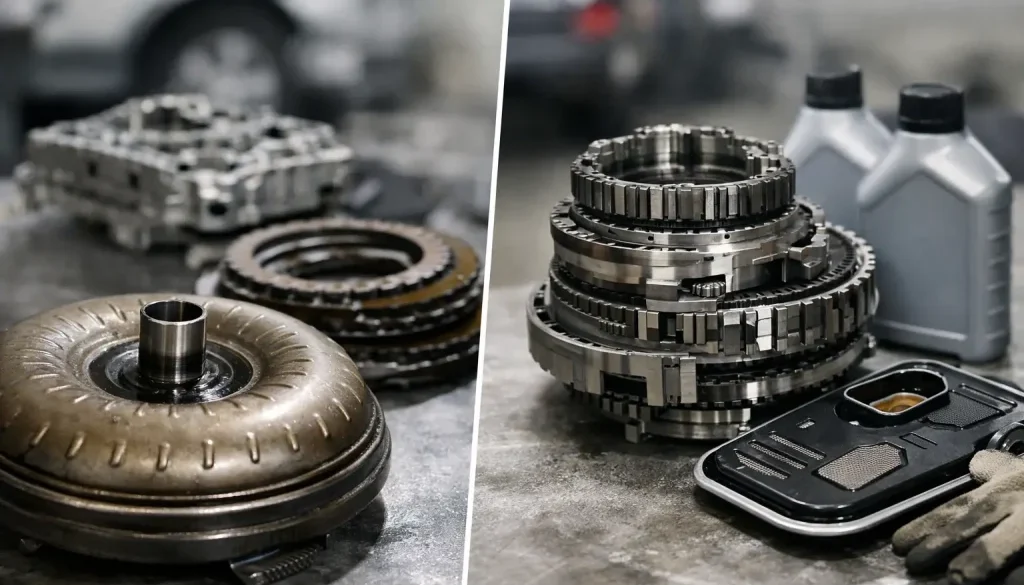
A conventional automatic transmission uses a torque converter and a set of internal gears controlled hydraulically and electronically. It is designed to change gears smoothly without a clutch pedal, using specialised automatic transmission fluid to lubricate, cool and operate internal components.
A DSG, short for Direct-Shift Gearbox, is a dual-clutch transmission. Rather than relying on a torque converter, it uses two clutches – generally one for odd-numbered gears and one for even-numbered gears. While one gear is engaged, the next gear can be pre-selected. This is why a DSG can deliver quick, efficient gear changes.
That clever design also means a DSG has different servicing needs. Depending on the gearbox fitted to the vehicle, a DSG service may involve dedicated transmission oil, a filter replacement and inspection of the mechatronic control system. Some DSG units use wet clutches that run in oil, while others use dry clutches with a different maintenance approach. The correct procedure always depends on the exact transmission code and manufacturer requirements.
A conventional automatic service also requires the correct fluid, but its filter arrangement, service interval and diagnostic checks can be quite different. Using the wrong fluid or treating a DSG like a standard automatic can affect shift quality and may lead to unnecessary wear.
What a professional DSG service involves
A professional DSG gearbox service begins with identifying the transmission correctly. This is particularly relevant across European vehicles, where similar-looking models can be fitted with different gearbox versions depending on the engine, model year and specification.
For a wet-clutch DSG, servicing commonly includes draining the old gearbox fluid, replacing the filter where applicable, refilling with the manufacturer-specified fluid and setting the fluid level at the correct temperature. Technicians may also use advanced diagnostic equipment to check for stored fault codes, monitor live gearbox data and complete adaptations or basic settings when required.
These checks matter because the mechatronic unit is the electro-hydraulic control centre of many DSG transmissions. It manages clutch operation and gear selection. A fault in this system can sometimes feel like a mechanical gearbox problem, even when the cause is electronic or hydraulic. Accurate diagnosis helps avoid replacing parts that are not responsible for the fault.
Dry-clutch DSG transmissions require an equally careful approach, but they do not necessarily receive the same fluid-and-filter service as a wet-clutch unit. Their clutch condition, actuator operation and fault history may be more relevant. This is a good example of why service advice should be based on the vehicle in front of the technician, not on a general rule.
Signs your DSG may need attention
A DSG does not need to fail completely before it deserves inspection. Drivers often notice a change in behaviour first: hesitation when moving off, shuddering at low speed, harsh or delayed shifts, revs rising without the expected acceleration, warning lights or a transmission message on the dashboard.
These symptoms do not automatically mean the gearbox needs major repairs. Low-speed hesitation can have more than one cause, and a warning message needs a proper scan rather than guesswork. Booking an assessment early gives a technician the opportunity to identify whether the concern relates to servicing, software, a sensor, clutch wear, the mechatronic unit or another vehicle system.
What happens during an automatic transmission service?
Conventional automatics have their own maintenance requirements. The transmission fluid works hard under heat and load, particularly in stop-start traffic, on regular freeway trips, when carrying passengers and equipment, or during long summer drives. Over time, fluid can degrade and lose some of its ability to protect and operate the transmission as intended.
An automatic transmission service may include draining and renewing fluid, replacing the filter or sump pan where fitted, checking for leaks and examining the condition of the old fluid. The workshop may also inspect electrical connections, assess road-test behaviour and scan the vehicle for transmission-related fault codes.
Not every automatic gearbox has an identical service schedule. Some manufacturers describe transmission fluid as long-life, but real-world driving conditions still matter. A vehicle used mainly for short trips and heavy traffic can experience a different operating life from one driven regularly on open roads. The best approach is to follow manufacturer guidance while considering the vehicle’s age, kilometres, service history and current performance.
Fluid condition tells part of the story
Transmission fluid should never be judged on colour alone. Some fluids darken with use without indicating an immediate failure, while others can show signs of overheating or contamination. A trained technician considers fluid condition alongside diagnostic results, driving symptoms and the gearbox’s maintenance record.
This is also why a fluid change is not a cure for every transmission concern. If a vehicle has internal wear, an electrical fault or a mechatronic issue, simply replacing the fluid may not solve the underlying cause. Clear advice should explain what the inspection has found and what work is genuinely recommended.
Why transmission servicing intervals matter
Waiting until a transmission starts slipping or displaying a warning light can turn a straightforward maintenance conversation into a more involved repair. Regular servicing helps remove degraded fluid and contaminants before they have more opportunity to affect valves, clutches, bearings and hydraulic circuits.
For DSG owners, the benefits extend to maintaining the controlled environment needed by the gearbox’s clutches and mechatronic components. For conventional automatics, timely fluid and filter servicing can support consistent hydraulic pressure, cooling and shift operation.
There is no universal kilometre figure that applies to every DSG or automatic. The right interval depends on the vehicle manufacturer, transmission type and driving conditions. If the service book is unclear, or the vehicle was purchased without complete records, a specialist inspection can provide a sensible starting point.
Choosing the right workshop for transmission care
Modern transmissions need more than a general visual check. The workshop should be able to identify the gearbox type, use suitable diagnostic equipment, follow the correct fluid specifications and explain the findings in plain language.
This is especially valuable when a vehicle has an intermittent issue. A brief shudder in peak-hour traffic, a delayed shift when cold or an occasional warning light can be difficult to assess without targeted testing and live data. An experienced transmission technician can look beyond the symptom and consider the system as a whole.
At Ringwood Auto Tech, DSG and automatic transmission servicing is approached with the same care we would want for our own vehicles. We take the time to assess the transmission type, service history and reported concerns, then provide practical recommendations to help you make an informed decision.
When to book a transmission inspection
If your vehicle is due for scheduled transmission maintenance, has an incomplete service history or no longer feels as smooth as it once did, it is worth arranging an inspection. Do not ignore dashboard warnings, burning smells, fluid leaks, pronounced shuddering or difficulty selecting gears.
Prompt attention does not mean assuming the worst. It means giving your vehicle the chance to be assessed accurately, with the right knowledge and equipment. Whether it has a DSG, S-Tronic, DCT or conventional automatic, the right service helps keep everyday trips safer, more predictable and less stressful.