S Tronic vs DSG – Is There Really a Difference?
A Volkswagen driver may call it a DSG. An Audi driver may call it S tronic. When a warning light appears, a gear change becomes rough or the vehicle hesitates at take-off, however, the S Tronic vs DSG question quickly becomes more than a naming exercise. Understanding what is fitted to your vehicle helps you make informed servicing decisions and get the right diagnosis when something does not feel right.
For most owners, the practical answer is reassuring: S tronic and DSG transmissions are closely related dual-clutch systems within the Volkswagen Group. They are designed to combine the convenience of an automatic with fast, efficient gear changes. But they are not all identical, and the specific transmission in your vehicle determines its fluid requirements, service intervals, known wear points and repair approach.
S Tronic vs DSG: the core difference
DSG stands for Direct Shift Gearbox. It is the name most commonly used across Volkswagen, Škoda, SEAT and some Cupra models. Audi uses the S tronic name for many of its dual-clutch automatic transmissions.
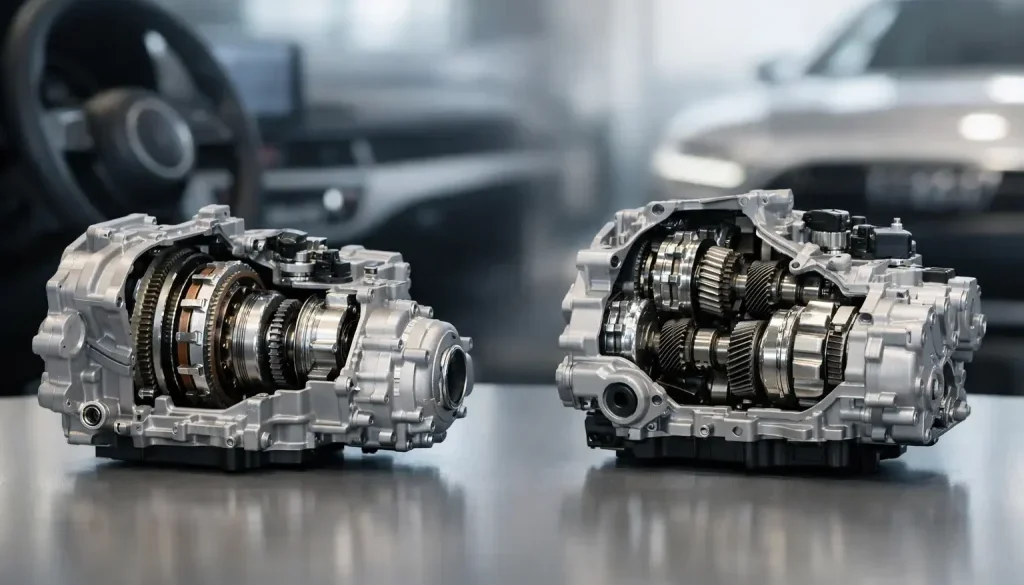
Both systems generally use two clutches and two gear sets. While one gear is driving the vehicle, the next likely gear can be prepared in advance. When the transmission changes gear, one clutch releases as the other engages. This is why a healthy DSG or S tronic can shift very quickly with little interruption to acceleration.
The branding alone does not tell the whole story. Audi vehicles can use several transmission designs depending on the model, engine layout, drivetrain and age of the vehicle. Some S tronic units are designed for front-wheel-drive applications, while others are built for quattro models and higher-torque engines. DSG gearboxes also come in different versions across the wider Volkswagen Group range.
So, is S tronic simply Audi’s name for DSG? In broad terms, yes. In workshop terms, the exact gearbox code and vehicle specification matter far more than the badge on the boot.
Why the transmission type matters for servicing
Dual-clutch transmissions are sophisticated systems. Their clutches, hydraulic circuits, control electronics and mechanical components must work together precisely. A service procedure that suits one unit may not suit another.
Many wet-clutch DSG and S tronic transmissions require scheduled fluid and filter servicing. The fluid does more than lubricate internal parts. It can also support hydraulic operation, cooling and clutch performance. Using the correct specification and following the vehicle-specific procedure helps protect the transmission from premature wear.
Some dry-clutch designs have different servicing requirements and do not always have the same routine fluid and filter schedule. That does not mean they are maintenance-free. Clutch condition, mechatronic performance, software calibration, driving patterns and fault history can all affect how the transmission behaves over time.
This is where assumptions can be costly. A generic automatic transmission service is not necessarily appropriate for every dual-clutch gearbox. Before recommending work, a transmission specialist should identify the gearbox fitted, review its service history, check for stored fault codes and assess the symptoms reported by the driver.
Wet-clutch and dry-clutch systems
A wet-clutch system operates its clutches in oil. This design is commonly used where the transmission needs to handle greater torque, although the exact application varies by model. Fluid condition is particularly important because it affects the clutch and hydraulic systems.
A dry-clutch system does not immerse its clutch packs in transmission fluid in the same way. It can offer efficiency benefits, but its clutch operation and heat management differ. Frequent stop-start driving, steep driveways and prolonged creeping in traffic can place extra demand on any dual-clutch transmission, especially when clutch engagement is already compromised.
Neither design is automatically better for every driver. They are engineered for different vehicle applications. The best care is to service and diagnose the gearbox according to its own design, not according to what is fitted to another model.
How S tronic and DSG feel on the road
When operating normally, both S tronic and DSG systems should provide prompt, controlled shifts. You may notice a different feel compared with a conventional torque-converter automatic, particularly at very low speeds. A slight pause as the vehicle moves off or a modest change in feel when creeping can be characteristic of a dual-clutch design.
That said, normal characteristics should not be used to explain away a genuine fault. Repeated shuddering, harsh engagement, excessive hesitation or warning messages deserve professional attention. Drivers often know their own vehicle well enough to notice when its behaviour has changed.
A gearbox concern may be related to clutch wear, fluid condition, a sensor issue, the mechatronic unit, internal mechanical wear or a separate engine-related problem that affects drivability. Accurate diagnosis is essential because similar symptoms can have very different causes.
Warning signs worth checking promptly
If your Audi, Volkswagen or other Volkswagen Group vehicle displays a gearbox warning, loses drive, selects gears roughly or behaves unpredictably, arrange an inspection rather than waiting for the concern to worsen. In some cases, early diagnosis can prevent a smaller issue from developing into a more involved repair.
Pay attention to changes such as:
- Shuddering or vibration when taking off
- Delayed engagement when selecting drive or reverse
- Harsh, flaring or inconsistent gear changes
- A flashing gear indicator or transmission warning message
- Reduced performance or the vehicle entering a limited-operation mode
- Unusual noises, burning smells or transmission fluid leaks
These symptoms do not automatically mean the transmission needs replacement. A proper assessment may identify a service requirement, a control-system fault, a mechatronic concern or clutch-related wear. Clear diagnostic information gives you a better basis for deciding what work is appropriate.
The mechatronic unit: a key part of the system
The mechatronic unit is one reason modern DSG and S tronic transmissions need specialist knowledge. It combines electronic control with hydraulic components to manage clutch operation and gear selection. In simple terms, it is a major part of how the transmission decides when and how to shift.
When a mechatronic issue occurs, the symptoms can be confusing. The vehicle might refuse to select a gear, shift abruptly, display a warning light or operate normally at times and poorly at others. Fault codes can provide useful direction, but codes must be interpreted alongside road-test results, service history and the vehicle’s actual behaviour.
Replacing parts without confirming the root cause can lead to unnecessary work. A careful diagnostic process is the sensible first step, particularly with transmissions that contain tightly integrated electronic and mechanical systems.
Looking after a dual-clutch transmission
The most useful ownership habit is to follow the maintenance requirements for your specific vehicle rather than relying on general advice found online. Keep service records, mention any changes in shift quality when booking your vehicle in, and do not ignore warning lights simply because the vehicle is still driving.
Driving style can also make a difference. In heavy Melbourne traffic, allow the vehicle to move naturally rather than repeatedly accelerating and braking over short distances where possible. Avoid holding the car on a hill using the accelerator. Use the brake or hill-hold function instead. These small habits reduce unnecessary clutch slip and heat.
If you have purchased a used vehicle with incomplete history, it is wise to have the transmission assessed as part of your maintenance planning. Identifying the gearbox type, checking for recorded faults and confirming the correct service requirements can provide valuable peace of mind.
Choosing the right help for S tronic vs DSG concerns
The central point in the S Tronic vs DSG discussion is that both names describe advanced dual-clutch technology, not a one-size-fits-all gearbox. Your vehicle may need a fluid and filter service, software-related assessment, clutch repair, mechatronic work or a more detailed internal inspection. The right answer depends on the exact transmission and the evidence found during diagnosis.
For drivers in Ringwood and Melbourne’s eastern suburbs, Ringwood Auto Tech can assess DSG and S tronic concerns with vehicle-specific diagnostics and practical advice. Whether your transmission is shifting normally or beginning to show a change in behaviour, timely professional attention helps protect the reliability of the vehicle you rely on every day.
A smooth shift is easy to take for granted. If yours no longer feels predictable, have it checked early and give yourself the confidence of knowing what your vehicle needs.