Mechatronic Unit Repair Review: What Matters
A mechatronic unit repair review should give you clarity, not more uncertainty. If your DSG or automatic vehicle is hesitating, shuddering, displaying a gearbox warning light or refusing to select a gear cleanly, the concern is usually not just the fault itself. It is whether the diagnosis is accurate, whether repair is the right path and whether your car will be dependable when it leaves the workshop.
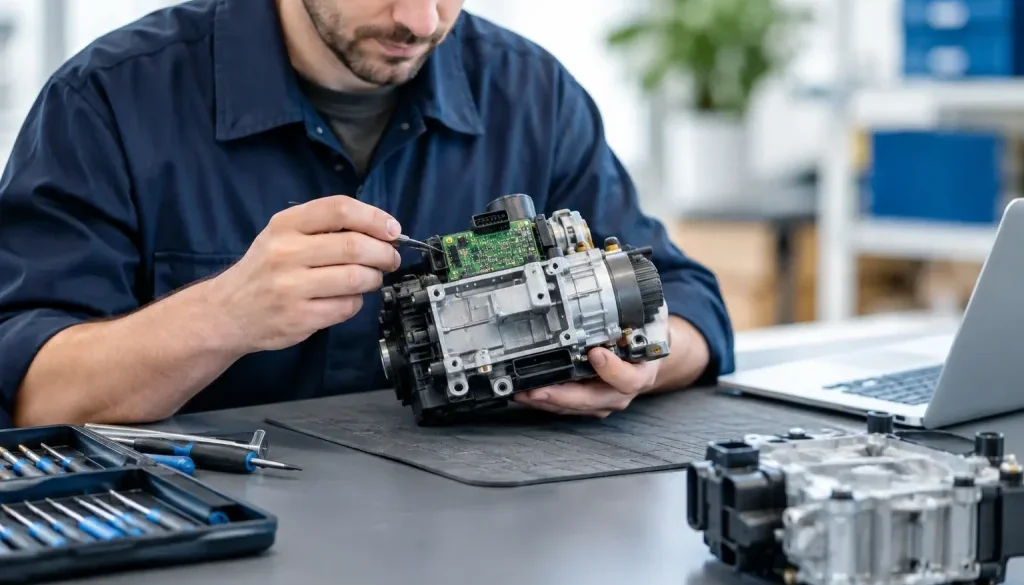
The mechatronic unit is a sophisticated control assembly within many dual-clutch and automatic transmissions. It combines electronic controls, sensors, solenoids and hydraulic components to manage gear selection, clutch operation and transmission pressure. When it develops a fault, even an otherwise well-maintained vehicle can become unpleasant or unsafe to drive.
For drivers around Ringwood and Melbourne’s eastern suburbs, a proper assessment starts with understanding the vehicle’s behaviour and confirming the cause before recommending any repair.
What a mechatronic unit repair review should cover
A worthwhile review begins with the symptoms you have noticed in normal driving. A transmission fault does not always occur constantly. It may appear only when the car is cold, during stop-start traffic, while reversing, after a longer drive or when accelerating uphill. Those details help direct the diagnostic process and can prevent assumptions based on one warning light or fault code.
The technician should then consider the vehicle’s service history, model, transmission type and any previous repair work. DSG, S-Tronic, DCT and conventional automatic transmissions use different designs and have their own known operating characteristics. A specialist approach matters because a symptom that appears to be a mechatronic failure may instead relate to clutch wear, transmission fluid condition, wiring, a sensor, an engine issue or a control-module fault.
Electronic scanning is an essential part of the process, but it is not the whole answer. Stored fault codes can point to an affected circuit, pressure concern or communication problem, yet they need to be interpreted alongside live operating data and a physical inspection. Clearing a code without finding why it returned is not a repair.
A complete review should also explain the likely cause in straightforward language. You should know what has failed or what requires further investigation, how it affects the way your vehicle drives and what repair options are appropriate. Clear communication helps you make a decision with confidence rather than feeling pressured by unfamiliar technical terms.
Signs that deserve prompt attention
Transmission concerns can develop gradually, which makes them easy to put off. Drivers often adapt to a minor hesitation or rough shift until the problem becomes more pronounced. Acting early may help limit the disruption and gives the workshop a better opportunity to diagnose the issue before further damage occurs.
Common signs linked to a possible mechatronic concern include delayed engagement when selecting Drive or Reverse, harsh or erratic gear changes, shuddering when moving away, loss of power through the gears, a flashing gear indicator, transmission warning messages or the vehicle entering reduced-performance mode.
Some vehicles may feel as though they have selected neutral while driving, or they may refuse to engage a gear at all. If this happens, it is sensible to stop driving when safe and arrange professional advice. Continuing to operate a vehicle with an unpredictable transmission can create a safety concern, particularly in traffic, at intersections or while merging.
Not every shift that feels different means the mechatronic unit has failed. Cold transmission fluid, software adaptations, clutch condition and driving conditions can all affect shift quality. That is exactly why diagnosis should be based on evidence, not guesswork.
Why a warning light is only the starting point
A gearbox warning light is a request for attention, not a final diagnosis. Modern vehicles monitor dozens of transmission inputs and outputs. A warning can be triggered by a hydraulic pressure variation, electrical connection, internal sensor reading, solenoid performance issue or communication fault between control modules.
A professional workshop will assess whether the recorded fault is current, intermittent or historic, then test the relevant systems before recommending a repair. This matters because replacing a major component without confirming the underlying cause may not resolve the concern.
Repair, replacement or further testing?
The right solution depends on the fault found, the transmission design and the condition of related components. In some cases, a mechatronic unit can be repaired by addressing the failed electronic or hydraulic elements and completing the required programming, adaptation and verification. In others, replacement of the unit may be the more suitable option.
There are also situations where the mechatronic unit is working as intended but another issue is creating similar symptoms. A worn DSG clutch pack, contaminated or overdue transmission fluid, damaged wiring, a battery-voltage concern or an engine fault can affect how the transmission responds. Treating each vehicle as an individual is essential.
The key trade-off is between moving quickly and moving accurately. A prompt diagnosis is valuable when your car is needed for work, school runs and daily travel, but rushing to a conclusion can result in unnecessary work. Thorough testing may take more care at the beginning, yet it provides a stronger basis for a lasting repair.
Once repairs are completed, the job should not end with fitting parts. Depending on the vehicle, correct fluid procedures, control-unit coding, basic settings or clutch adaptations may be required. The vehicle should then be checked to confirm that gear engagement, shift quality and fault memory are operating as expected.
Questions worth asking about a mechatronic unit repair
Before authorising work, ask what evidence supports the diagnosis and whether related systems have been checked. It is also reasonable to ask whether there are other faults that could produce the same symptoms, what testing will follow the repair and what ongoing servicing will help protect the transmission.
A good workshop will welcome these questions. You do not need to understand every internal component to make an informed decision. What matters is receiving a practical explanation of the issue, the recommended work and any factors that may affect the result.
For vehicles with DSG, S-Tronic or other dual-clutch systems, ask whether the workshop has the diagnostic equipment and experience relevant to your transmission. These systems are highly capable, but they require precise procedures and model-specific knowledge. General mechanical experience alone is not always enough when an electronic-hydraulic control system is involved.
At Ringwood Auto Tech, transmission concerns are assessed with the same care we would want for our own vehicles. Our focus is on clear diagnosis, dependable workmanship and advice that considers how you use your car, not simply the fault code on a screen.
Looking after your transmission after repair
A repaired transmission benefits from sensible ongoing maintenance. Follow the manufacturer’s recommended servicing requirements, including correct transmission fluid and filter servicing where applicable. Use the right fluid specification, as automatic and dual-clutch systems can be sensitive to fluid type and level.
It also helps to report any returning symptoms early. A brief hesitation, warning light or change in shift quality may be useful information while it is still intermittent. Keep notes about when it occurs, whether the vehicle is hot or cold and what the car was doing at the time. This gives your technician a clearer picture at the next inspection.
Transmission problems can feel daunting because the parts involved are complex. The right review makes the next step simpler: understand the symptoms, confirm the cause and choose a repair path based on proper testing. That approach protects your vehicle, supports safer driving and gives you greater peace of mind every time you select a gear.