
DSG Fluid Filter Change: What Your Car Needs
A DSG fluid filter change is not just another item on a service checklist. For vehicles fitted with a wet dual-clutch gearbox, it is a key part of protecting the precise hydraulic and electronic systems that make fast, smooth gear changes possible. When the correct fluid and filter service is carried out at the right interval, your vehicle is better placed to deliver the dependable performance you expect every day.
DSG transmissions are common in Volkswagen Group vehicles, including Volkswagen, Audi, Skoda, CUPRA and some Porsche models. They are clever, responsive gearboxes, but they have maintenance needs that differ from a conventional automatic or manual transmission. Knowing what your vehicle requires can help prevent unnecessary wear and give you greater peace of mind behind the wheel.
Why a DSG fluid filter change matters
A DSG, or Direct-Shift Gearbox, uses two clutches and sophisticated control systems to pre-select gears. This allows the transmission to change gear quickly and efficiently. In wet-clutch DSG systems, transmission fluid is used to lubricate, cool and support hydraulic operation within the gearbox.
Over time, heat, normal clutch wear and repeated stop-start driving can affect the condition of that fluid. The filter is there to capture contaminants before they circulate through sensitive transmission components. If old fluid remains in service for too long, or a restricted filter is not replaced when required, the gearbox may not receive the protection it needs.
This is especially relevant for Melbourne drivers who spend plenty of time in traffic, on school runs, commuting or travelling across varying road conditions. Short trips and heavy urban driving can place more demand on a transmission than open-road kilometres alone suggest.
A professional DSG service replaces the specified fluid and, where applicable, the filter and seals. It also gives a specialist the opportunity to inspect the vehicle, check for stored fault codes and assess whether there are early signs of a concern that should be addressed before it develops further.
Does every DSG gearbox need a fluid and filter service?
Not every DSG is the same. This is where general advice found online can become misleading.
Many wet-clutch DSG and S-Tronic transmissions have a scheduled fluid and filter replacement requirement. However, some dry-clutch DSG units use a different design and may not have the same routine fluid and filter service procedure. The correct approach depends on the exact transmission fitted to your vehicle, its age, engine combination, service history and manufacturer requirements.
Rather than assuming all dual-clutch gearboxes need identical maintenance, have the transmission identified properly. A workshop with DSG experience can confirm the gearbox type and recommend maintenance that suits your vehicle, rather than applying a one-size-fits-all service.
This is also why a standard engine oil service should not be treated as a substitute for a transmission service. Your engine, brakes, cooling system and gearbox each require their own maintenance plan.
Service intervals are vehicle-specific
For many wet DSG systems, fluid and filter servicing is commonly required at set kilometre or time intervals. The exact interval varies by model and transmission type, so the log book and manufacturer information remain the starting point.
If you have recently purchased a used European vehicle and the DSG service history is unclear, it is wise to have it assessed. Confirming what has been done and what is due can be far more reassuring than relying on a seller’s recollection or an incomplete service record.
Signs your DSG may need attention
A DSG service is ideally completed before symptoms appear. Preventative maintenance is generally the most sensible way to look after a complex transmission. Still, changes in how the vehicle drives should never be ignored.
Arrange an inspection if you notice several of the following concerns:
- Hesitation, shuddering or harsh engagement when taking off
- Delayed gear changes or a noticeable thump between gears
- Warning lights, transmission messages or the vehicle entering reduced-performance mode
- Unusual noises, burning smells or evidence of a fluid leak beneath the vehicle
These symptoms do not automatically mean the gearbox needs major repairs. They can be linked to fluid condition, software, sensors, a mechatronic unit, clutch wear or another mechanical issue. Accurate diagnosis matters because the right repair depends on the cause, not simply the symptom.
If the vehicle is still driving normally but is overdue for its scheduled transmission service, it is still worth booking it in. Waiting for a warning light is rarely a good maintenance strategy.
What happens during a professional DSG fluid filter change?
A proper DSG service is more involved than draining and refilling fluid. Dual-clutch transmissions need the correct approved fluid, the correct quantity and a controlled filling procedure. Fluid level is often checked at a specified transmission temperature, which is why suitable diagnostic equipment and workshop processes are essential.
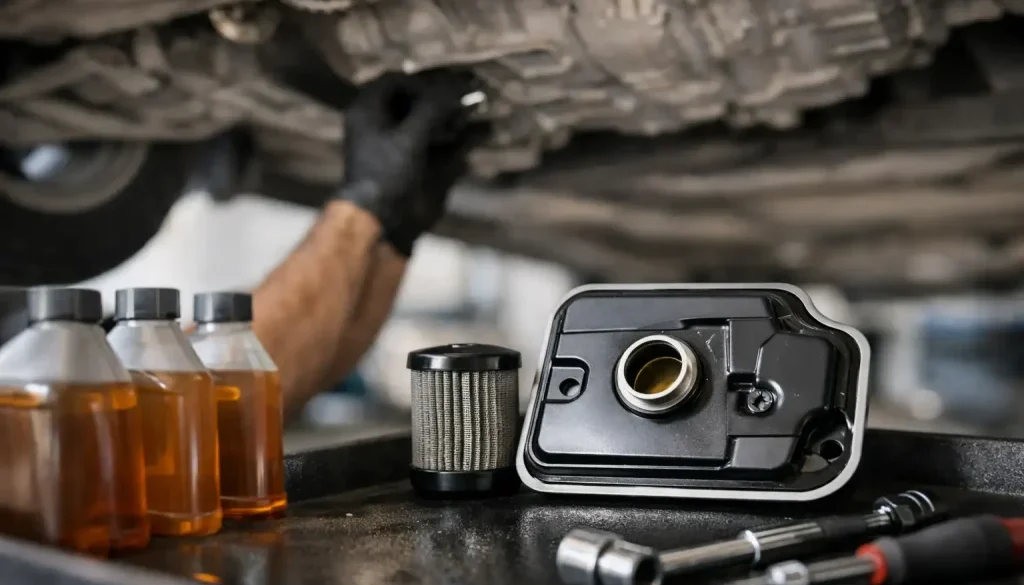
The vehicle is assessed first, including a check for fault codes and signs of leaks or external issues. The old transmission fluid is drained in line with the manufacturer procedure. Where the transmission design includes a serviceable filter, the filter and associated seals are replaced before the correct fluid is installed.
The technician then uses diagnostic equipment to monitor transmission conditions and verify the fluid level. Depending on the vehicle and findings, further checks may be recommended. This may include looking at adaptation values, assessing clutch operation or investigating any faults that have been stored in the transmission control system.
The goal is not to add unnecessary work. It is to make sure the service is completed correctly and that any concern is explained clearly. For a system with tight tolerances and advanced electronics, details matter.
Why the correct fluid is non-negotiable
Transmission fluid is not interchangeable simply because it looks similar or is labelled for automatic transmissions. DSG systems can require a specific fluid specification designed for their clutch packs, hydraulic circuits and operating temperatures.
Using an incorrect fluid, filling the wrong amount or skipping the temperature-based level check can affect shift quality and component protection. It may also make later diagnosis more difficult. This is one reason DSG servicing should be handled by technicians who understand modern European transmission systems and have the right equipment for the job.
At Ringwood Auto Tech, our approach is based on understanding the vehicle in front of us. We treat each and every car as though it were our own, providing practical recommendations and clear communication around DSG servicing, diagnostics and repairs.
Fluid servicing is protection, not a cure-all
A DSG fluid filter change is valuable maintenance, but it cannot reverse every transmission fault. If a gearbox has ongoing clutch damage, mechatronic faults, internal wear or a significant electronic issue, it may need more than a routine service.
Equally, a rough gear change does not always mean the transmission is failing. A diagnostic assessment may identify a related engine issue, worn mount, software concern or another fault affecting how the vehicle feels on the road. That is why it helps to describe exactly when the problem occurs – such as when cold, in traffic, under acceleration or when selecting reverse.
The best outcome comes from combining regular servicing with prompt attention to changes in drivability. It supports accurate decisions and can reduce the risk of a small concern becoming a larger interruption to your routine.
Looking after your DSG in Melbourne’s eastern suburbs
For drivers in Ringwood and Melbourne’s eastern suburbs, a DSG service is a sensible part of long-term vehicle care, particularly if your car is relied on for work, family travel or the daily commute. Keeping service records up to date also makes it easier to understand your vehicle’s maintenance history over time.
If you are unsure when your DSG was last serviced, have noticed a change in shifting, or want a transmission specialist to confirm your vehicle’s requirements, arrange a professional inspection. Clear advice, the correct servicing procedure and quality workmanship can help keep your vehicle driving smoothly and reliably for the kilometres ahead.