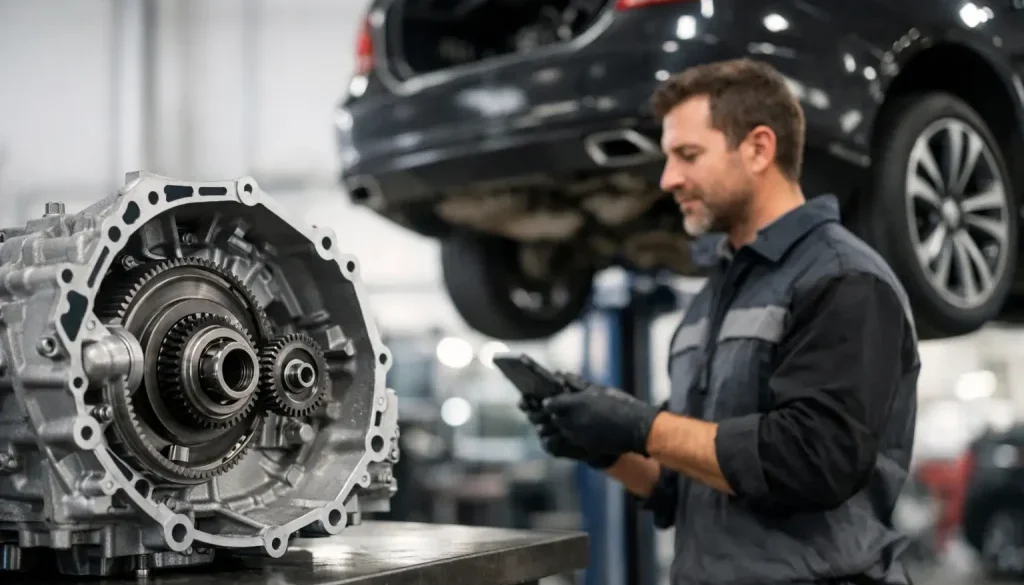
When You Need a European Car Transmission Expert
A hesitation when pulling away, a shudder in traffic or a warning light that comes and goes can make every drive feel uncertain. A European car transmission expert understands that these symptoms are not simply inconveniences – they can be early signs that a DSG, S-Tronic or conventional automatic transmission needs professional attention.
For drivers in Ringwood and Melbourne’s eastern suburbs, the right response is not to guess at the cause or wait for the issue to become impossible to ignore. It is to have the vehicle assessed by technicians with the diagnostic equipment, experience and service knowledge suited to modern European vehicles. Accurate diagnosis helps protect safety, reliability and the long-term condition of your car.
Why European transmissions need specialist attention
European vehicles are known for refined performance, but their transmissions are often highly sophisticated systems. Many models use dual-clutch gearboxes, such as Volkswagen Group DSG and Audi S-Tronic units, which use electronically controlled clutches, hydraulic components and a mechatronic control unit to select gears quickly and efficiently.
These systems do not behave like older conventional automatics. A slight pause or a firm shift may be normal in one vehicle under certain conditions, while the same symptom in another can point to clutch wear, a fluid concern, a sensor fault or a mechatronic issue. The vehicle’s service history, model, transmission type and fault codes all matter.
That is why a general inspection alone may not provide a clear answer. A European transmission specialist takes a considered approach, combining a road test where appropriate, electronic diagnostics and an inspection of the transmission’s condition. The aim is to identify the actual cause before recommending work, rather than replacing parts based on a symptom alone.
Signs it is time to see a European car transmission expert
Transmission concerns can begin subtly. You may notice the car feels different before a warning light appears, particularly during stop-start driving, hill starts or low-speed manoeuvring. Pay attention if your vehicle develops repeated shuddering, harsh or delayed gear changes, slipping between gears, unusual noises, a burning smell, or a warning message relating to the gearbox.
A DSG or dual-clutch vehicle may also feel reluctant when selecting Drive or Reverse, surge unexpectedly at low speed, or enter reduced-performance mode. These symptoms do not automatically mean a major repair is required. A low battery voltage, an engine-management fault or software-related issue can sometimes affect shift quality too. That is precisely why proper diagnosis matters.
If the concern is intermittent, make a note of when it occurs. Is it only when the car is cold? Does it happen after longer trips, in heavy traffic or when reversing? Clear information from the driver can give the technician useful context and help shorten the path to an answer.
Servicing is preventative care, not an afterthought
Transmission servicing is one of the most practical ways to look after a European vehicle. Depending on the transmission fitted to your car, this may involve replacing specified transmission fluid and filters, checking for leaks, inspecting operating data and resetting service information where required.
The correct fluid is critical. Modern automatic and dual-clutch transmissions are designed around particular fluid specifications, and using an unsuitable product can affect lubrication, hydraulic operation and shift quality. The service interval also varies between manufacturers, models and transmission types, so a one-size-fits-all schedule is not the best approach.
Some drivers delay transmission maintenance because the car still drives normally. Unfortunately, by the time a transmission starts to shudder, slip or display a warning, the underlying issue may have been developing for some time. Following the manufacturer’s maintenance requirements, alongside professional advice tailored to the vehicle, gives you a better chance of addressing wear before it affects day-to-day reliability.
What specialist transmission diagnosis involves
A professional assessment should begin with listening. Your technician needs to understand what you have felt, heard or seen, as well as when the issue began and whether any recent servicing or repairs were completed.
From there, advanced diagnostic equipment can communicate with the vehicle’s control modules and retrieve stored fault information. However, fault codes are clues, not a complete diagnosis. A code may identify an affected circuit or operating condition, but further testing is often needed to determine whether the root cause is electrical, mechanical, hydraulic or related to the transmission control system.
For DSG, S-Tronic and other dual-clutch systems, the mechatronic unit is a key area of assessment. This assembly manages electronic and hydraulic control of gear selection and clutch operation. Problems in this area can produce warning lights, poor shifting, failure to select gears or reduced performance. In other cases, the issue may relate to clutch wear, adaptation values, wiring, sensors or fluid condition.
The best outcome is a clear explanation of what has been found, what needs attention now and what can be monitored. This gives you the information to make a sensible decision for your vehicle, without technical jargon getting in the way.
Repair, rebuild or maintenance: what is the right path?
There is no single answer for every transmission fault. A vehicle with a service-related issue may only need the correct maintenance procedure and a thorough inspection. A car with a failed sensor, solenoid or mechatronic concern may require targeted repair work. More significant internal wear can call for clutch replacement, transmission restoration or a gearbox rebuild.
The right option depends on the condition of the unit, the vehicle’s use and the findings of the diagnostic process. For example, a commuter vehicle that spends much of its time in congestion may place different demands on a dual-clutch transmission than a car used mainly for longer highway journeys. Towing, frequent short trips and inconsistent maintenance can also affect the condition of an automatic gearbox.
A trustworthy workshop will explain the trade-offs in plain language. You should understand the purpose of the recommended repair, how it relates to the symptoms you have experienced and what ongoing maintenance may be needed afterwards. That transparency is especially valuable when dealing with complex European transmission systems.
Choosing a workshop you can rely on
When your transmission is not performing as it should, confidence in the workshop matters as much as the repair itself. Look for a team that has experience with European vehicles and modern automatic systems, including DSG, DCT and S-Tronic transmissions. Specialist diagnostic capability and a methodical repair process are essential, but so is clear communication.
At Ringwood Auto Tech, European transmission concerns are approached with practical advice, professional diagnostics and careful workmanship. As a family-owned workshop, the focus is on treating each vehicle as though it were our own and keeping customers informed from the first assessment through to the recommended solution. Courtesy vehicle options can also help reduce disruption when your car needs to stay in the workshop.
Whether you drive a Volkswagen, Audi, BMW, Mercedes-Benz, Skoda, Volvo or another European make, do not assume an unusual shift is something you simply need to live with. Small changes in how your car drives are worth checking early. Timely specialist care can help you keep your vehicle dependable for the school run, the daily commute and the trips that matter most.