
DSG Gearbox Diagnostics Melbourne Drivers Trust
A DSG that hesitates before moving away from the lights, jolts during a low-speed gear change or flashes a transmission warning is asking for attention. Professional DSG gearbox diagnostics Melbourne drivers can depend on identify what the vehicle is reporting, what is happening on the road and what work is genuinely required before a small concern becomes a major interruption to daily driving.
For many drivers across Ringwood and Melbourne’s eastern suburbs, a DSG-equipped vehicle is relied on for school runs, commuting, client visits and weekend travel. When it no longer feels smooth or predictable, the priority is clear answers, safe advice and repairs carried out with care.
Why DSG concerns need a proper diagnosis
DSG stands for Direct-Shift Gearbox. It is a type of dual-clutch transmission that uses electronically controlled clutches and gear sets to provide quick, efficient shifts. You will find DSG systems in many Volkswagen Group vehicles, while closely related dual-clutch and S-Tronic systems appear in a range of European cars.
These gearboxes are sophisticated. Their operation depends on mechanical components, transmission fluid where applicable, sensors, wiring, control software and the mechatronic unit working together. A symptom that feels like a clutch problem may be caused by a control fault, an overdue service requirement or an issue elsewhere in the vehicle.
That is why replacing parts based on a warning light or a brief road test alone is not a sensible approach. Accurate diagnosis protects the gearbox, helps avoid unnecessary work and gives you a clearer basis for deciding what happens next.
Common signs your DSG should be checked
A fault does not always arrive as a complete loss of drive. Often, the first signs are intermittent or only appear in particular traffic conditions. You may notice a hesitation when selecting Drive or Reverse, a shudder when moving off, harsh or delayed shifts, engine revs rising without the expected response, or clunking between gears.
Some vehicles enter a reduced-performance mode, show a gearbox warning message or limit the gears available. Others drive normally when cold but become less predictable after time in stop-start traffic. These details matter. They help a technician distinguish between a recurring electronic fault, a temperature-related issue, clutch wear or a problem with transmission operation.
It is also worth paying attention to changes that seem minor. Repeated low-speed juddering, a new vibration or a delay when pulling into traffic can affect confidence behind the wheel. If the gearbox warning light is on, the vehicle cannot select a gear, or it is behaving unpredictably, arrange an assessment promptly rather than continuing to drive it as usual.
What DSG gearbox diagnostics in Melbourne involve
A thorough diagnostic process starts with listening. The technician needs to understand when the issue happens, whether it is worse cold or hot, what warning messages have appeared and whether recent servicing or repairs may be relevant. A precise description from the driver is valuable, especially for faults that do not occur every time the car enters the workshop.
The next stage uses professional scan equipment to communicate with the vehicle’s transmission and related control modules. This can reveal stored fault codes, live operating data, clutch adaptation information and signals from sensors or switches. Fault codes are clues, not final answers. They must be considered alongside the vehicle’s service history, condition and real-world behaviour.
A careful inspection may also involve checking the transmission fluid condition and service record where the gearbox design requires it, assessing electrical connections and reviewing whether any related engine or battery issues could be affecting transmission performance. Low system voltage, for example, can create electronic symptoms that deserve investigation rather than assumption.
A controlled road test can be another useful part of the process. It allows the technician to observe shift quality, engagement, warning behaviour and operating temperature under conditions that reflect the concern. Not every symptom can be reproduced immediately, so the diagnostic outcome may depend on what the vehicle is doing on the day. Good communication is particularly helpful in these cases.
The mechatronic unit is only one possible cause
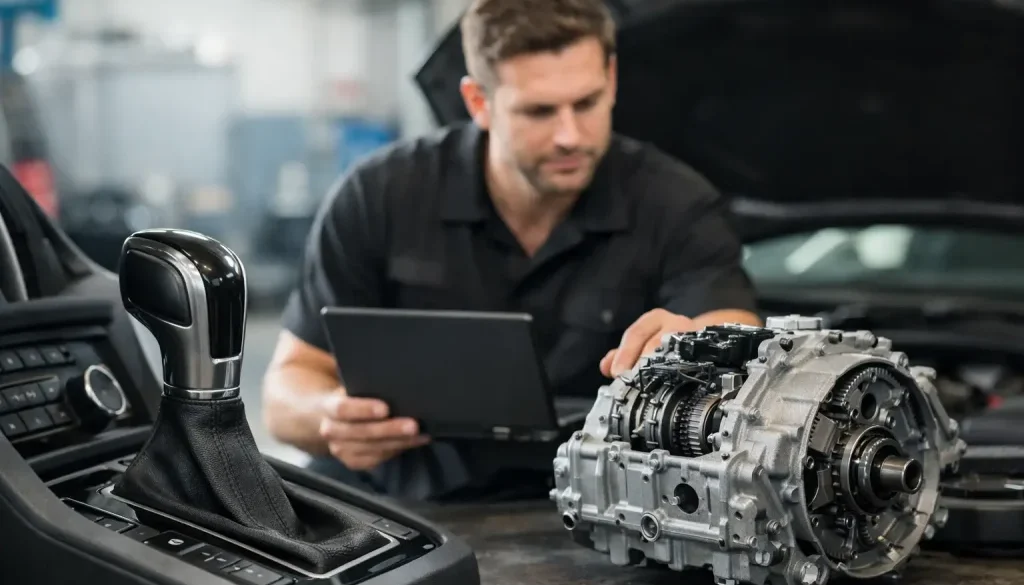
The mechatronic unit is often discussed when DSG problems arise. It combines electronic controls, hydraulic components and valve body functions to manage gear selection and clutch operation. A mechatronic fault can cause warning messages, harsh shifting, gear selection issues or reduced operation, but it is not automatically the source of every DSG complaint.
Depending on the gearbox and the diagnostic findings, the concern could relate to clutch wear, an actuator, internal mechanical components, fluid condition, a sensor fault, software or a connection issue. In some cases, a transmission service and the correct adaptation procedures may be appropriate. In others, a targeted mechatronic repair, clutch replacement or more extensive transmission repair may be needed.
The right repair depends on evidence, not guesswork. This is especially important because different DSG variants have different maintenance needs and common fault patterns. The vehicle’s model, transmission code, kilometres, service history and driving symptoms all influence the recommendation.
Do not confuse a service with a repair
Routine DSG maintenance plays an important role in long-term transmission care, but it does not replace diagnosis when symptoms are present. Gearboxes that require fluid and filter changes need the correct fluid specification, procedure and service intervals for that transmission. Delaying required servicing can contribute to wear and poor operation.
At the same time, a fresh service will not repair a damaged clutch pack, a failing mechatronic component or an internal fault. A professional workshop should explain whether the vehicle needs maintenance, fault-finding, repair work or a combination of these. That distinction helps prevent false expectations and supports a practical plan for the vehicle.
For drivers purchasing a used European vehicle, it is wise to check whether its transmission servicing has been maintained. A documented service history is useful, but any hesitation, warning light or harsh shifting should still be investigated on its own merits.
Why early assessment can make a difference
A DSG is designed to make thousands of fast, controlled decisions while you drive. Continuing to use it when it is slipping, overheating, delaying gear engagement or displaying warnings can place extra strain on affected components. It can also leave you without reliable performance when you need it most, such as joining busy traffic or travelling with the family.
Early diagnosis does not mean every issue will have a simple outcome. Some faults are intermittent, and some repairs require more involved work. What it does provide is a clearer understanding of the vehicle’s condition, the urgency of the concern and the most appropriate path forward.
It is sensible to make a note of the circumstances when the problem appears. Include whether the car was cold or warm, whether it occurred in traffic, the gear selected and any message shown on the dash. Avoid repeatedly cycling the ignition or trying to force the vehicle to continue if it cannot select a gear normally. Those observations can assist the diagnostic process.
A specialist approach for eastern suburbs drivers
Modern transmissions require more than a general scan and a quick opinion. They need technicians who understand the relationship between the DSG system, the engine, vehicle electronics and the way the car behaves on the road. At Ringwood Auto Tech, the focus is on clear fault-finding, dependable workmanship and straightforward advice that puts the condition of your vehicle first.
You should expect an explanation in plain language: what has been found, what may be causing it, what repair or maintenance is recommended and why. If further testing is needed before a final recommendation can be made, that should be explained clearly too. This approach gives drivers the confidence to make informed decisions without being left to interpret technical terms alone.
Courtesy car availability and practical booking support can also make a real difference when a vehicle needs to stay at the workshop. For families, professionals and business owners, keeping life moving while the correct diagnostic work is completed is part of good customer care.
Looking after your DSG between visits
You do not need to be a transmission expert to help protect your vehicle. Follow the manufacturer’s service requirements, do not ignore warning lights or drivability changes, and raise concerns early at a scheduled service or inspection. If you regularly drive in heavy traffic, carry loads, make short trips or use the vehicle for frequent stop-start travel, mention this when discussing maintenance needs.
A smooth, responsive gearbox should not be taken for granted when its behaviour has changed. Booking a professional assessment at the first persistent sign gives you the best chance of protecting reliability, safety and peace of mind on every trip.