

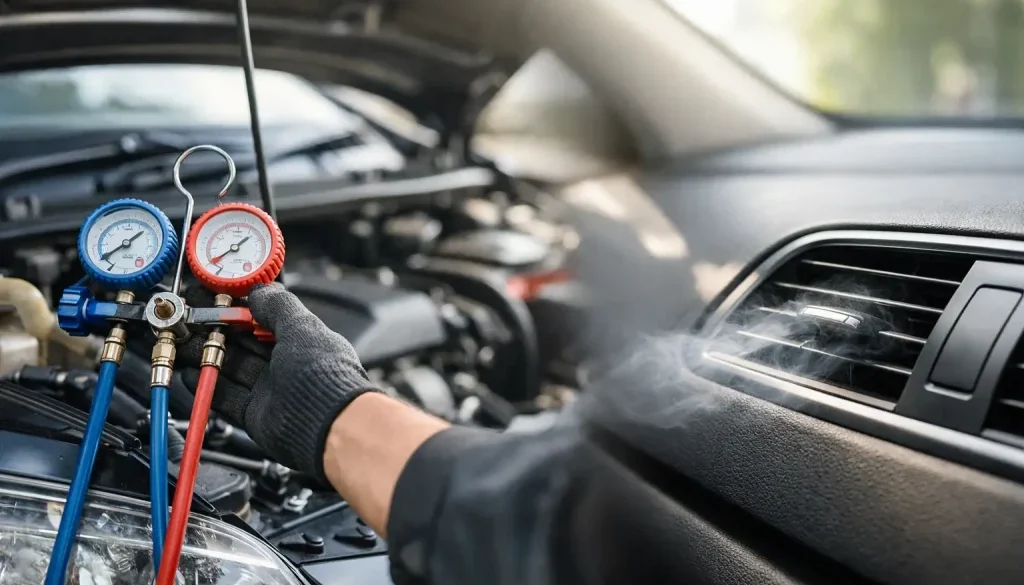
Car Air Conditioning Regas: Signs It Is Due
A Melbourne summer school run, a long commute on EastLink or a weekend trip with the family can quickly become uncomfortable when the air con is only pushing warm air. A car air conditioning regas may be the answer, but it is not always as simple as adding more refrigerant. The right service starts with understanding why the system is no longer cooling as it should.
Your vehicle’s air conditioning does more than make the cabin pleasant. It helps remove moisture from the air, clears mist from the windscreen in wet weather and makes driving less tiring when the temperature rises. When it is not working properly, a professional inspection can protect both your comfort and the air conditioning system itself.
What is a car air conditioning regas?
Your car’s air conditioning system uses refrigerant to absorb heat from inside the cabin and release it outside the vehicle. Over time, a small amount of refrigerant can naturally escape through hoses, seals and connections. When the level falls too low, the system cannot circulate and cool efficiently.
A car air conditioning regas involves professionally recovering any remaining refrigerant, checking the system, evacuating moisture and air, then refilling it with the correct refrigerant and oil specification for the vehicle. Modern vehicles may use different refrigerant types, so using the correct equipment and procedure matters.
A regas can restore cold air where the refrigerant level has gradually dropped. However, refrigerant is not a consumable like engine oil. If the system has lost its charge quickly or repeatedly, there may be a leak or component fault that needs attention before a regas is carried out.
Signs your air conditioning needs attention
The most obvious sign is air that never gets properly cold, even with the temperature set low and the fan operating normally. You may also notice that the air feels cool while driving but becomes warmer at traffic lights, or that the system takes much longer than usual to bring the cabin temperature down.
Poor demisting is another common clue. Air conditioning helps dry the air entering the cabin, which is especially useful on cold, wet mornings in Melbourne. If the windscreen takes longer to clear, or keeps fogging up despite the demister being on, the air conditioning system may not be performing at its best.
Unusual smells, rattling noises when the air con is switched on, water leaking into the cabin, or a warning light should not be treated as a simple regas issue. These symptoms can point to a blocked drain, worn compressor, electrical concern, damaged condenser or another fault. Accurate diagnosis is the sensible next step.
Why a regas is not always the whole solution
It is tempting to assume warm air means the system is low on gas. Sometimes that is true, particularly in an older vehicle that has gradually lost cooling performance. But air conditioning relies on several components working together: the compressor, condenser, evaporator, expansion device, fans, pipework, seals, pressure sensors and cabin filter all have a role.
A damaged condenser at the front of the vehicle can be exposed to road debris. A leaking seal can allow refrigerant to escape slowly. An electrical fault may prevent the compressor from engaging, while a faulty cooling fan can leave the system struggling when the car is stationary. In these situations, adding refrigerant alone may provide only temporary improvement, if any at all.
This is why a professional air conditioning service includes checks beyond the temperature coming through the vents. A technician can assess system pressures, inspect visible components, check for signs of leakage and confirm the air conditioning controls and compressor operation are behaving as they should. If a fault is found, you should receive a clear explanation of the recommended repair and why it is needed.
How often should air conditioning be serviced?
There is no identical schedule for every car. The vehicle’s age, how often the air conditioning is used, its service history and the condition of its components all make a difference. Many drivers only think about air con when summer arrives, but leaving the system unused for long periods can allow seals to dry out and can make small issues harder to notice.
Running the air conditioning for a short time regularly throughout the year is generally beneficial. It keeps refrigerant and lubricant circulating through the system and helps you identify a change in performance before the first hot day of the season.
For a vehicle that is still cooling well, air conditioning can be assessed as part of regular servicing or whenever you notice reduced performance. If it has been several years since the system was checked, or you have recently bought a used vehicle with an unknown service history, an inspection offers useful peace of mind.
What happens during a professional air conditioning service?
A thorough service is designed to look after the system, not simply produce a cold vent temperature on the day. The exact process depends on the vehicle and its symptoms, but it normally begins with an assessment of cooling performance and the operation of key components.
The technician can recover and measure the refrigerant already in the system, helping identify whether the charge is low. The system may then be vacuum tested to remove air and moisture before being recharged with the manufacturer-specified refrigerant quantity. Moisture is a concern because it can affect cooling performance and contribute to internal corrosion.
Where appropriate, the service may also include inspecting the cabin pollen filter. A blocked filter does not usually stop the air con from making cold air, but it can reduce airflow and contribute to stale odours in the cabin. Replacing it when required can make a noticeable difference to comfort.
If testing suggests a leak or a mechanical issue, further diagnosis should come before any assumption that a straightforward regas will solve the problem. That approach avoids overlooking the reason the system lost refrigerant in the first place.
Looking after your air conditioning between services
There are a few practical habits that can help you spot concerns early without attempting repairs yourself. Pay attention to how quickly the cabin cools, whether airflow has reduced and whether the system behaves differently when the vehicle is idling. A new smell, clicking noise or inconsistent cooling is worth mentioning at your next service appointment.
Keeping the cabin filter maintained and clearing leaves from the area around the base of the windscreen can also support good airflow. If your car has been parked in direct sun, opening the doors briefly before switching on the air con can help release trapped heat. Using recirculation after the cabin has begun to cool may also reduce the load on the system.
Avoid ignoring a system that has stopped cooling altogether. Continuing to operate an air conditioner with an underlying fault can place extra strain on components, and a small leak may become a larger issue over time.
Air conditioning care for Ringwood drivers
For drivers in Ringwood and Melbourne’s eastern suburbs, reliable air conditioning is valuable in every season. It keeps summer trips more comfortable, supports clear vision on damp winter mornings and makes everyday driving easier for passengers of all ages.
At Ringwood Auto Tech, air conditioning concerns are approached with the same care as any other vehicle maintenance issue. The aim is to identify what your car needs, explain the findings in plain language and complete the work to professional workshop standards. If you have noticed weak cooling, poor demisting or an air con system that is behaving differently, arranging an inspection now can help you head into the next change of season with a more comfortable, dependable vehicle.


How Often Should You Regas Your Car Aircon? - Ringwood Auto Tech
July 23, 2026 @ 5:02 pm
[…] the system has lost its cooling performance, it is worth finding out why before simply adding more refrigerant. Car air conditioning is a […]
Aircon Not Blowing Cold? What Your Car May Need - Ringwood Auto Tech
September 25, 2026 @ 2:02 pm
[…] is understandable to assume warm air means the car needs an aircon regas. In some cases, restoring the refrigerant charge is the appropriate service, especially if testing […]